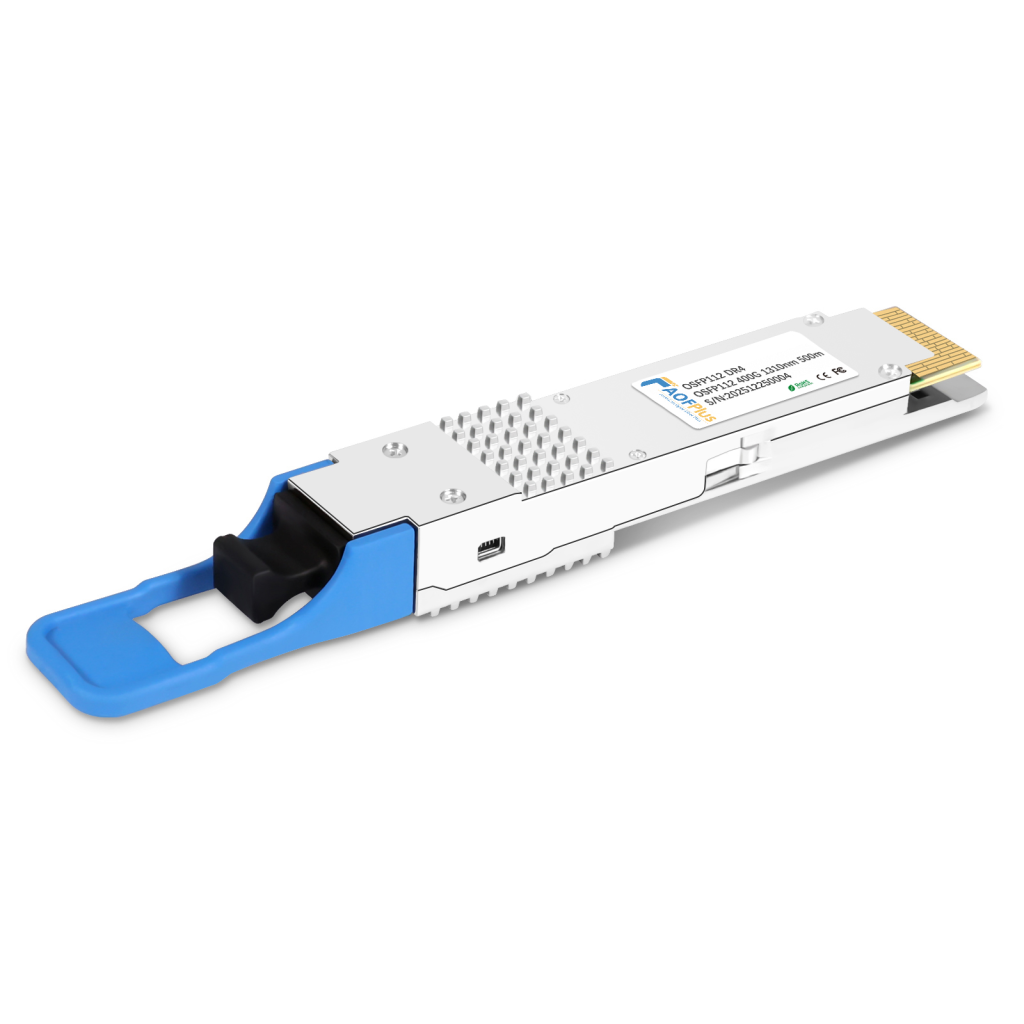
As is well known, 40G QSFP + SR4 fiber transceivers are an ideal solution for short-range interconnection in 40G networks, offering many advantages. However, 40G QSFP + AOC cable also possesses similar functionality to optical transceivers and is no less capable than 40G QSFP + SR4 fiber optic transceiver; it can even replace them for signal transmission. Since both can perform 40G short-range interconnection, what are the differences between 40G QSFP + AOC cable and 40G QSFP + SR4 fiber transceiver? AOFPLUS as a professional supplier of AOC cables and optical transceivers, we will explain the differences between them in this article.
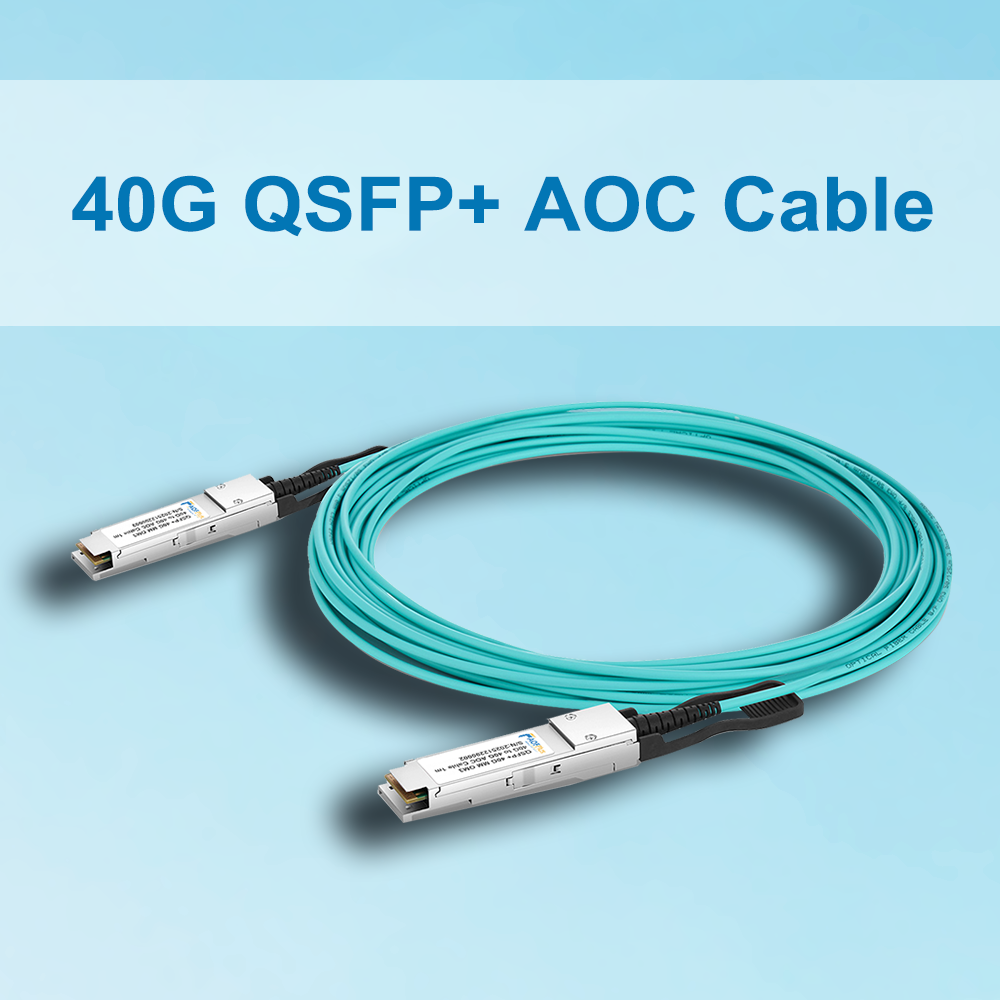
What Is a 40G QSFP + AOC Cable?
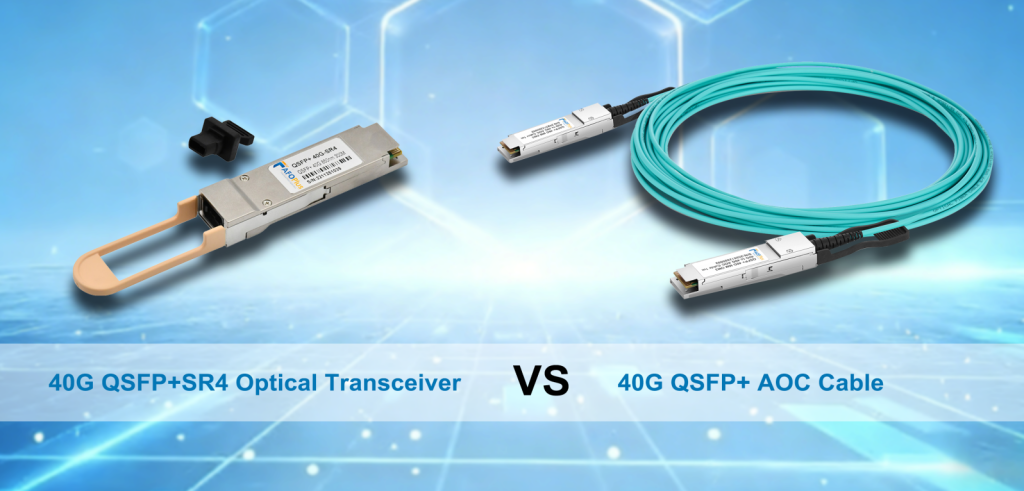
The 40G QSFP+ AOC active optical cable consists of multimode fiber and two QSFP+ connectors. It has four data channels in each signal direction, with a maximum transmission rate of 11.3 Gbit/s per channel and a maximum transmission distance of 150 meters. It is an ideal interconnection solution for 40G networks and is mainly used in 40G data center computer rooms and cloud computing systems.
What Is a 40G QSFP+ SR4 Optical Transceiver?
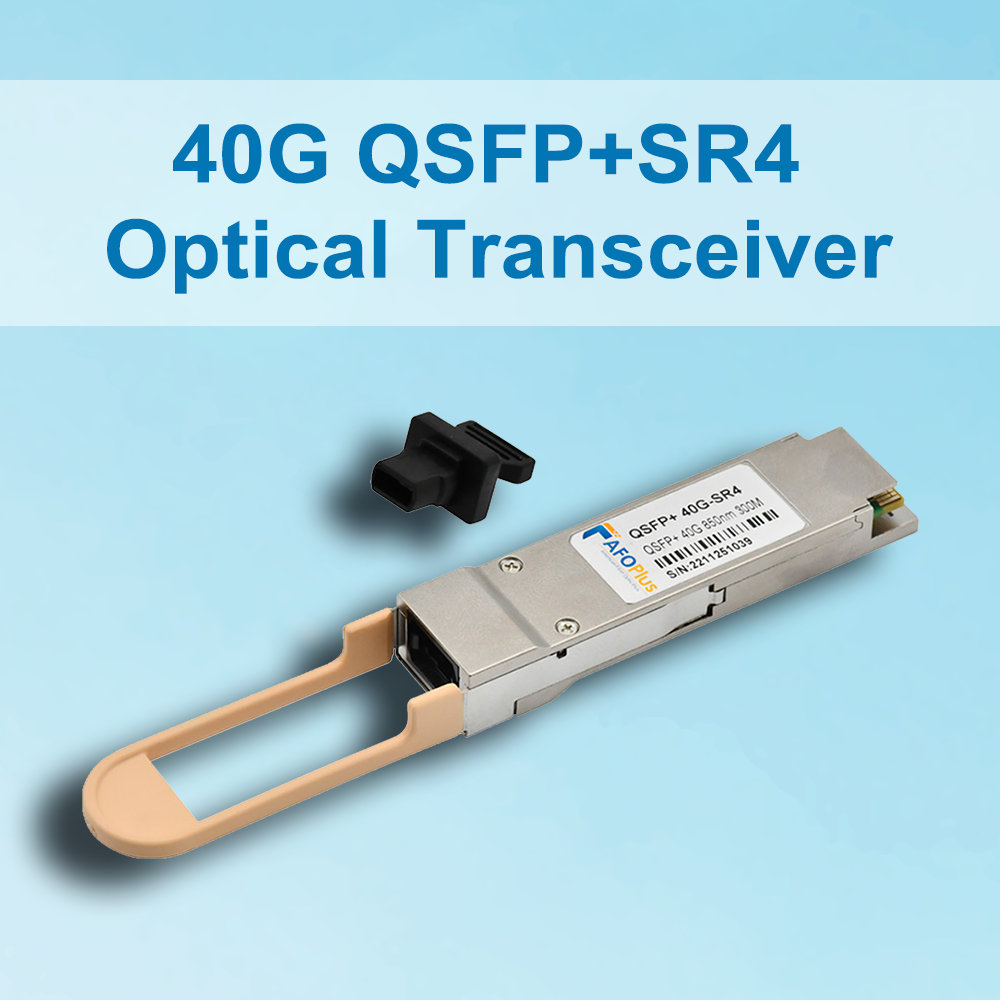
The 40G QSFP+ SR4 optical transceiver uses a QSFP+ package, which is a four-channel small hot-swappable fiber optic transceiver with a transmission rate of 40Gbps. It has four independent transmit and receive optical signal channels, each supporting 10Gbps data transmission, with a maximum transmission distance of 150M. It is mainly used in routers, switches, and host adapter buses.
40G QSFP+ AOC Cables vs. 40G QSFP+SR4 Optical Transceivers
Transmission distance: Generally, 40G QSFP+ SR4 optical transceiver can support longer transmission distances than 40G QSFP+ AOC cable. If the transmission distance is less than 100m, the 40G QSFP+ AOC cable and 40G SR4 QSFP+ fiber optic transceivers have the same performance, but when the transmission distance is greater than 100m, the 40G QSFP+ SR4 fiber transceiver is a better choice.
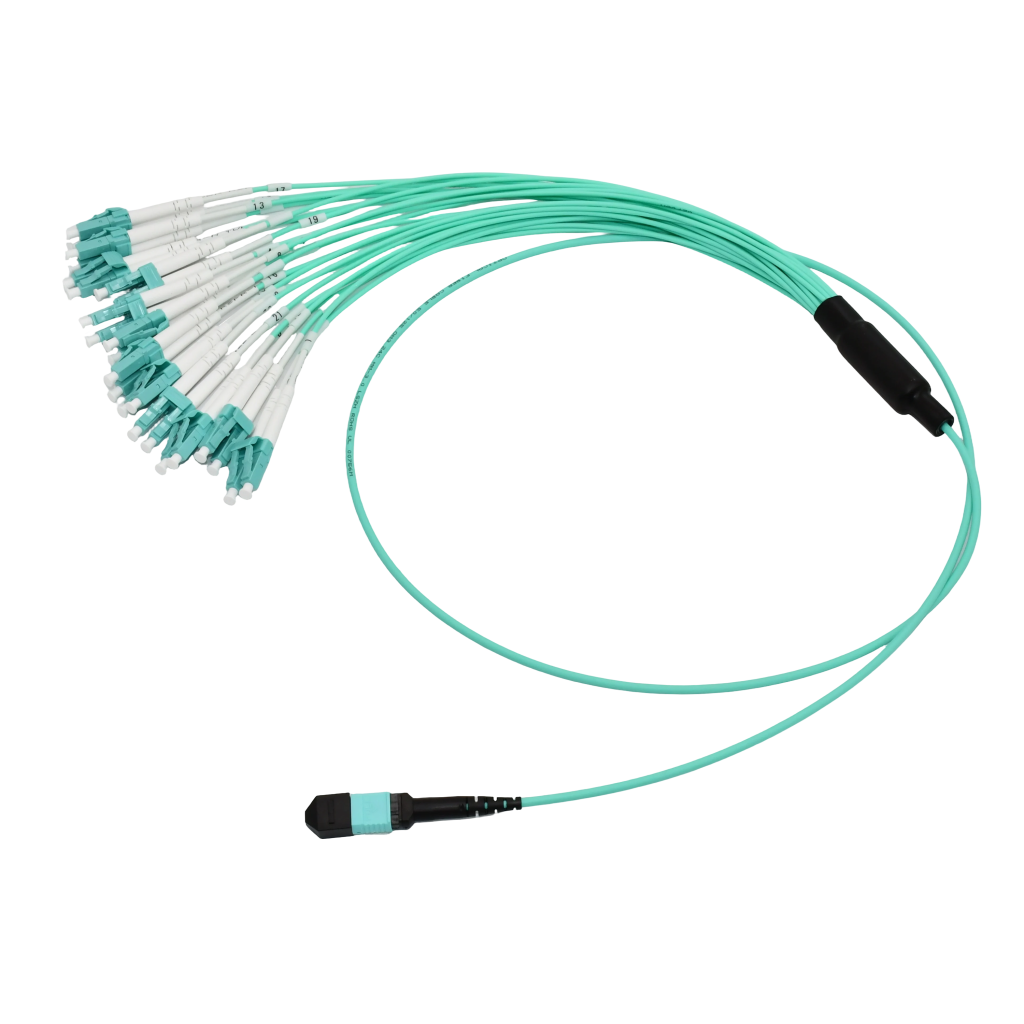
Installation and Maintenance: For the 40G QSFP + AOC active optical cable, users only need to plug the two connectors into the switch to start operation, avoiding the need to connect two optical modules. In case of a fault, you can directly replace the 40G QSFP + AOC cable. For the 40G QSFP + SR4 optical transceivers, an MPO fiber optic patch cord connection is required for testing to locate the problem. Therefore, the 40G QSFP + AOC cable is simpler and faster to install and maintain than the 40G QSFP + SR4 fiber transceivers.
Power consumption: Typically, the power consumption of 40G QSFP+ AOC active optical cable is lower than that of 40G QSFP+ SR4 fiber optic transceivers. The maximum power consumption of mainstream AOC cable products is generally below 1.5W, while the maximum power consumption of SR4 optical transceivers is usually below 3.5W.
Reliability: Compared to the 40G QSFP+ SR4 fiber transceiver solution, the 40G QSFP+ AOC cable adopts an integrated design, reducing external fiber optic connection interfaces and avoiding additional interface insertion loss and reflection risks. It also reduces end-face contamination and wear issues caused by frequent fiber insertion and removal, resulting in higher system stability in short-distance interconnection scenarios.
Cost: Currently, the market price of 40G QSFP + AOC active optical cable is generally lower than that of 40G QSFP + SR4 optical transceivers. 40G QSFP + AOC cable does not require additional fiber optic patch cords, avoiding the need for cleaning the optical module, thus saving users more time and money. Given a limited budget, 40G QSFP + AOC active optical cable is definitely your best choice.
Flexibility: 40G QSFP+ AOC cables offer quick and plug-and-play installation, making them suitable for short-distance fixed cabling scenarios; however, they are less flexible and not suitable for frequent adjustments or cross-rack deployments.
40G QSFP+ SR4 optical transceivers feature separable fiber optic cables and transceivers, with freely configurable length and type, offering greater flexibility in maintenance and upgrades, making them suitable for structured cabling and large data centers.
Conclusion
In conclusion, both 40G QSFP+ AOC active optical cables and 40G QSFP+ SR4 optical transceivers are effective solutions for 40G short-range interconnection, but they are designed to meet different deployment requirements. The 40G QSFP+ AOC cable offers a plug-and-play, integrated design with lower power consumption, simplified installation, and cost advantages, making it highly suitable for short-distance connections within racks or between nearby cabinets. On the other hand, the 40G QSFP+ SR4 fiber transceiver provides greater flexibility and scalability, especially in structured cabling systems or scenarios requiring longer transmission distances and independent replacement of optical transceivers and fiber. Therefore, when choosing between the 40G QSFP+ AOC Cable and 40G QSFP+SR4 optical transceivers, users should consider factors such as transmission distance, maintenance requirements, power consumption, budget, and future network expansion plans. Selecting the right solution based on actual deployment needs will ensure optimal network performance, reliability, and long-term cost efficiency.