40G transceiver has become a vital component in high speed data communications. The 40G transceiver enable the rapid transfer of large volumes of data, meeting the demands of modern data centers, enterprise networks, and telecommunications infrastructure. Let’s explore the different types of 40G transceiver module available.
QSFP+ (Quad Small Form Factor Pluggable Plus) Transceivers
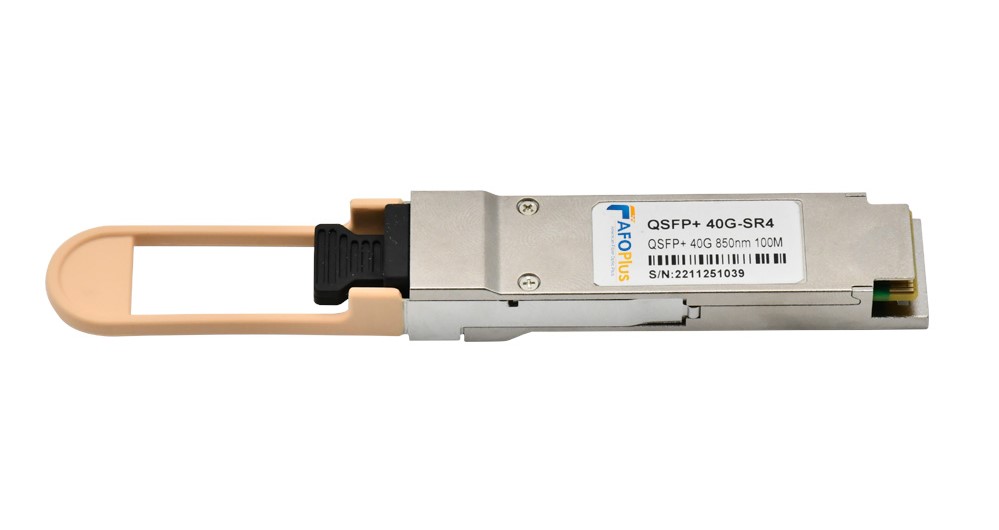
QSFP+ SR4 (Short Reach 4)
QSFP+ SR4 40G transceiver is designed for short distance applications, typically within a data center. It uses multimode fiber and operates at a wavelength of 850nm. The QSFP+ SR4 40G transceiver variant can support distances up to 100 meters or 150 meters depending on the fiber quality and cable construction. QSFP+ SR4 40G transceiver is popular for interconnecting servers, switches, and storage devices within a rack or across adjacent racks. For example, in a cloud computing data center, where there is a need for high-speed connections between numerous servers in a confined space, the QSFP+ SR4 40G transceiver provides an efficient solution.
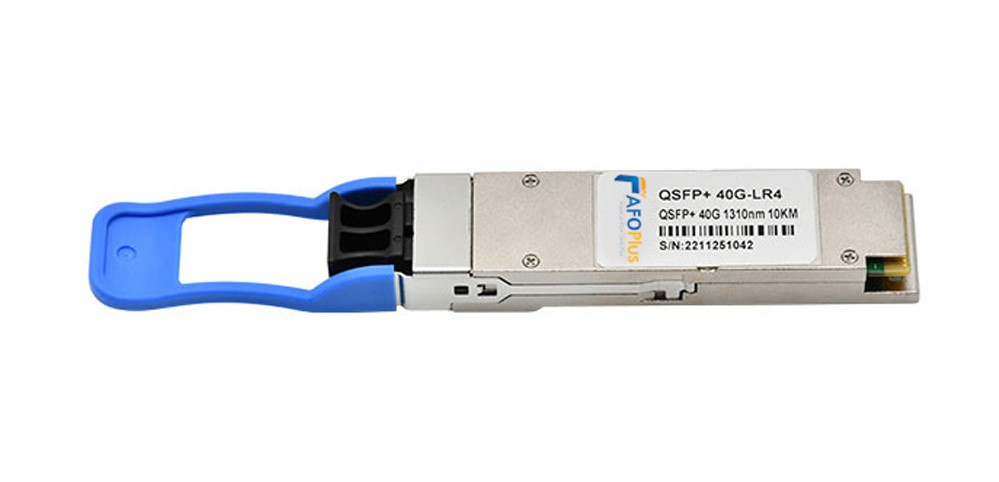
QSFP+ LR4 (Long Reach 4)
QSFP+ LR4 40G transceiver is optimized for longer distances. QSFP+ LR4 40G transceiver utilizes singlemode fiber and has a wavelength of 1310nm. It can achieve transmission distances of up to 10 kilometers. This makes it suitable for interconnecting different parts of a large data center campus or for metro area network (MAN) connections. For instance, in a corporate campus with multiple data center buildings, the LR4 transceiver can link them together, ensuring reliable and high-speed data transfer between the facilities.
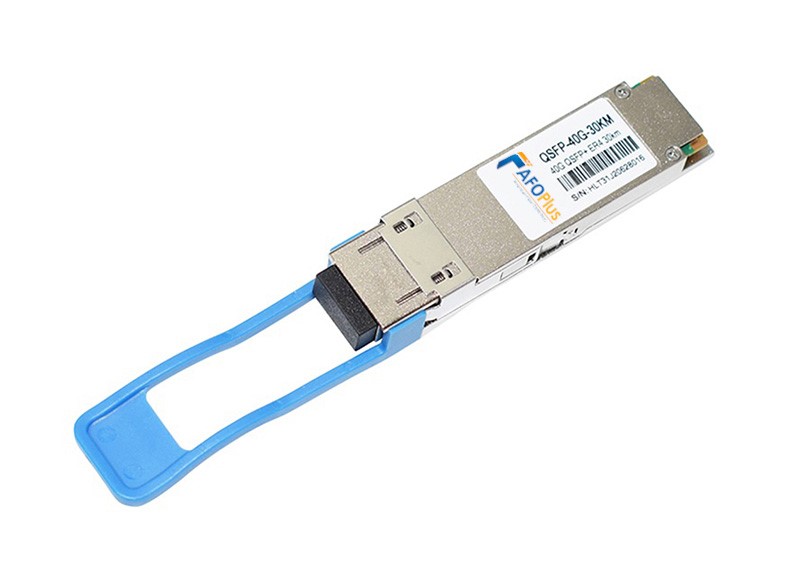
QSFP+ ER4 (Extended Reach 4)
With an even greater reach, the QSFP+ ER4 40G transceiver is designed for long-haul applications. It also uses single-mode fiber and operates at 1550nm. It can cover distances up to 40 kilometers. This type of transceiver is often used in telecommunications networks for connecting central offices or for long distance fiber optic links between data centers in different geographical locations. For example, in a submarine cable network, where data needs to be transmitted over vast oceanic distances, the QSFP+ ER4 40G transceiver can play a crucial role in maintaining the integrity of the signal.
CFP (Centum Form-factor Pluggable) & CFP2 40G Transceivers
CFP 40GBASE-LR
The CFP 40GBASE-LR transceiver is a predecessor to some of the more compact form factors. CFP 40G transceiver uses singlemode fiber and can transmit data over distances up to 10 kilometers. It was widely used in early 40G deployments in large enterprise and carrier networks. Although it is a larger form factor compared to QSFP+, it still offers reliable performance for medium to long-distance connections. For example, in a traditional telecommunications carrier’s network infrastructure upgrade to 40G, the CFP 40GBASE-LR was a common choice.
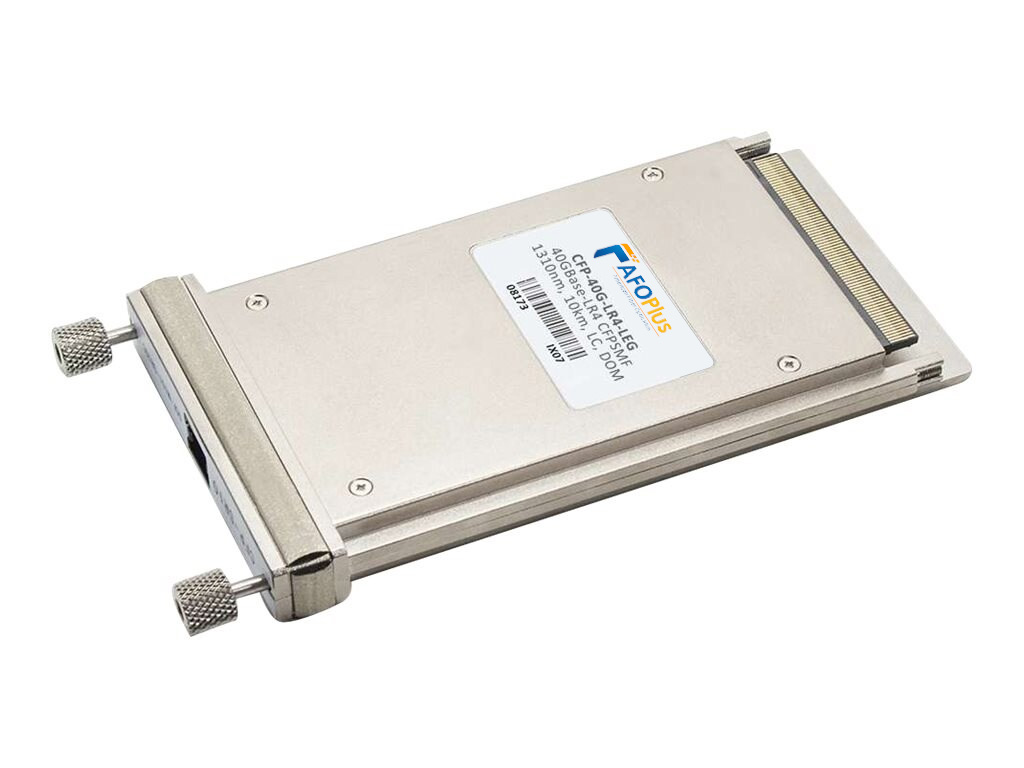
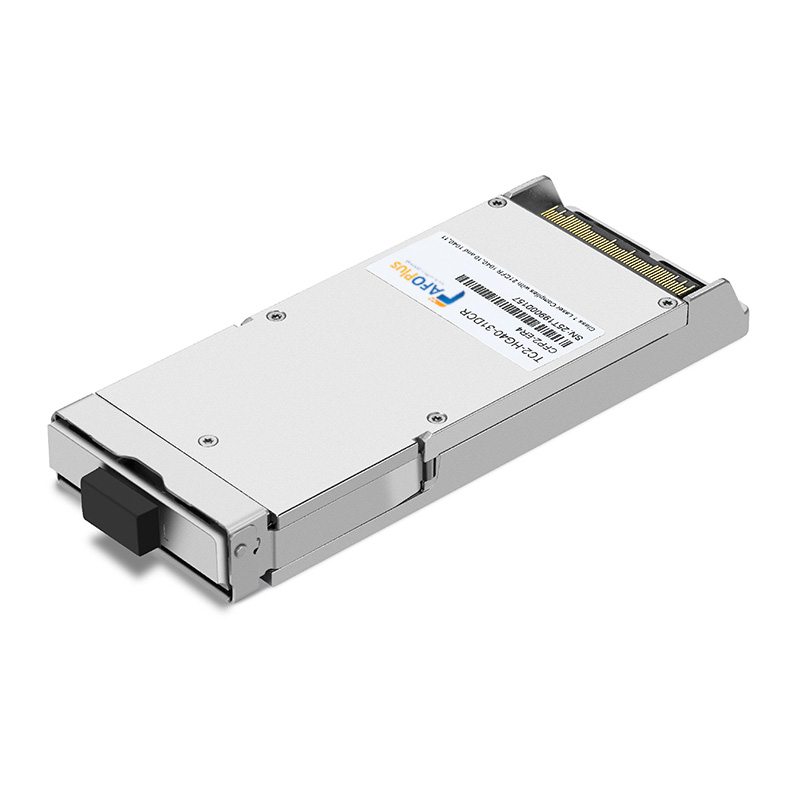
CFP2 40GBASE-ER
The CFP2 40GBASE-ER transceiver is another option in the CFP family. It is designed for extended reach applications, using singlemode fiber and operating at 1550nm. It can achieve distances up to 40 kilometers. The CFP2 form factor is more compact than the original CFP, allowing for higher density installations in network equipment racks. It is suitable for scenarios where longer-distance 40G connections are required in a more space-efficient manner, such as in modern data center interconnects that also need to consider rack space optimization.
Conclusion
The different types of 40G transceiver offers a range of options to meet various distance, fiber type, and application requirements. Whether it’s for short range high density connections within a data center or long haul telecommunications links, network engineers and administrators can choose the most appropriate 40G transceiver based on their specific networking needs.