The field of fiber optic technology is continuously evolving at an astonishing pace, with new technologies emerging every year that are faster and more compact. This constant innovation is shaping the entire industry, pushing the boundaries of technology, and making it possible to build more efficient and scalable networks.
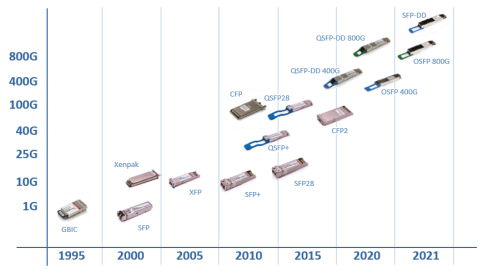
Optical transceiver technology has made significant progress since its inception. Initially, networks primarily relied on 100 Mbit and 1 G solutions, while 10 G solutions were expensive and only used in specific applications. Today, we see 800 G optical transceivers being used in advanced packaging forms such as OSFP and QSFP-DD, and 100 G solutions can provide reliable performance over longer distances. Wavelength division multiplexing (WDM) technology has also become a core technology, greatly increasing the capacity and efficiency of modern networks.
We will delve into the evolution of optical transceiver form factors, from early GBIC models to the highly efficient SFP-DD, and explore how these advancements continue to shape the future of fiber optic technology.
2024 and Beyond
In 2024, more advanced 800G optical transceiver modules were introduced. The latest models support 8-channel or 4-channel configurations and utilize PAM4 modulation technology, achieving transmission speeds of 100 Gbps or even up to 200 Gbps per channel. These optical transceiver modules offer various transmission distance options, ranging from 100 meters (SR) to 2 kilometers (FR), with some models employing dual-wavelength bidirectional transmission or parallel single-mode (PSM) technology to achieve the required bandwidth.
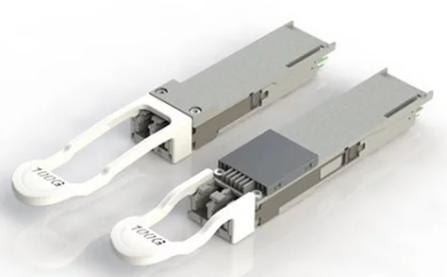
One of the popular optical transceiver technologies in 2024 is QSFP28-DCO. It combines the compact QSFP28 form factor with coherent optical technology, providing higher performance and longer transmission distances for network expansion. Bidirectional (BiDi) optical transceivers also saw advancements in 2024, with new QSFP28 BiDi transceivers supporting 100GBASE transmission over distances up to 70 kilometers.
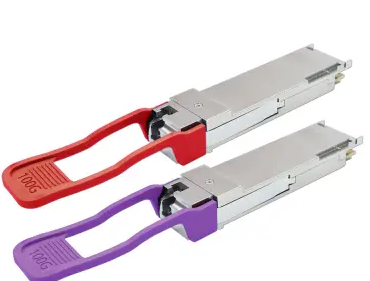
The SFP56 transceiver was also launched in 2024, providing a compact solution for single-channel 50G Ethernet applications. This form factor supports PAM4 signal transmission and is backward compatible with existing SFP+ and SFP28 ports, enabling transmission distances of up to 100 meters using multimode fiber (SR) and 10 kilometers using single-mode fiber (LR).
Looking ahead to 2024 and beyond, the focus will likely shift to higher data rates and more efficient form factors. Optical transceiver manufacturers are already expanding their product lines, introducing 1.2T and 1.6T products to meet the growing market demand for energy-efficient, cost-effective, and high-capacity optical solutions. We have already seen increasing adoption of coherent optical transceivers, which are currently available in various form factors such as QSFP, and we expect this growth trend to continue, particularly in long-distance transmission applications, while also seeing development in short-distance high-performance applications.
Machine learning and artificial intelligence (AI) technologies are driving increased demand for faster and more efficient fiber optical transceivers. Large, complex AI models and increasingly sophisticated data center workloads are pushing the limits of network processing capabilities.

These applications require unprecedented bandwidth and low latency, and utilize technologies such as InfiniBand, creating an urgent need for more advanced transceivers in data centers to meet the required high data transfer speeds. The 800G OSFP module is expected to be available by the end of 2024, providing a high-density, high-bandwidth solution for high-performance computing and artificial intelligence applications.
Looking ahead, we may see the industry further push the limits of data transmission, for example, by developing 3.2T optical modules and integrating coherent optical technology to achieve even longer transmission distances.
2020-2023
The QSFP-DD800 (Quad Small Form-factor Pluggable Double Density 800G) module was introduced in 2021. This form factor is based on the QSFP-DD standard and utilizes eight-channel 100G PAM4 signal transmission technology to achieve speeds of up to 800 Gbps. It supports high-density data center applications and is backward compatible with existing QSFP-DD ports, using LC and MPO-16 connectors.
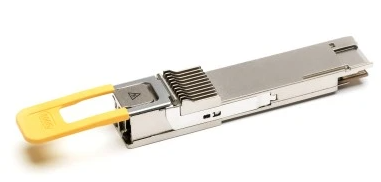
The QSFP112 (Quad Small Form-factor Pluggable 112G) was released in 2021 and is the next generation of the QSFP series. The QSFP112 supports a data rate of 112 Gbps per channel in a four-channel QSFP system. This form factor is backward compatible with older QSFP56 and QSFP28 modules.
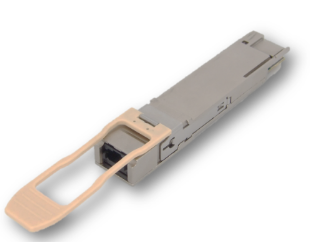
In 2022, existing SFP28, QSFP28, and QSFP-DD form factors were upgraded. The QSFP-DD standard continued to evolve, supporting higher speeds and greater efficiency. The introduction of 100G DWDM QSFP28 transceivers allows customers to extend or upgrade their existing 10G/40G networks to 100G applications without changing their existing infrastructure.
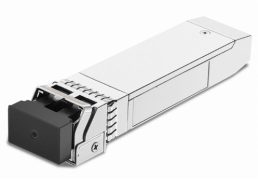
In 2023, more QSFP28 optical modules were introduced to the market, along with the release of 100G O-band DWDM optical modules and 400G ZR coherent optical modules. The 100G O-band DWDM optical modules can support transmission distances of up to 30 kilometers without the need for dispersion compensation modules or optical amplifiers. The 400G ZR and ZR+ coherent pluggable optical modules feature low power consumption and a small form factor, with transmission speeds ranging from 100 Gbps to 400 Gbps, making them ideal for high-density data centers and metropolitan networks.
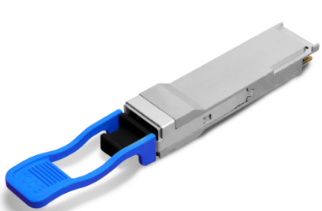
Although DWDM technology has continuously developed and improved in recent years, CWDM remains a popular choice for many low-to-medium bandwidth applications. For smaller networks that don’t require the full transmission capabilities of DWDM, CWDM provides a cost-effective scaling solution, allowing businesses to strike a balance between performance and budget.
2015-2019
In 2018, CSFP (Compact SFP) upgraded the bidirectional SFP, enabling it to transmit two bidirectional data streams simultaneously over a single CSFP-compatible SFP port. CSFP can be used to connect two sites equipped with bidirectional SFPs, thereby reducing the required number of ports by half and lowering power consumption. CSFP supports a transmission rate of 2 x 1000Mbps and a transmission distance of up to 20 kilometers.
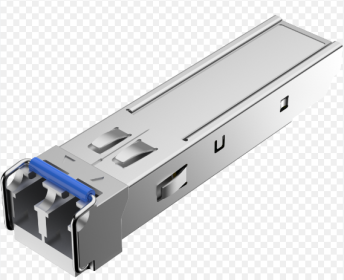
The QSFP56 standard, established in 2019, doubles the data transmission rate, reaching a maximum speed of 200 Gbps. QSFP56 achieves this in two ways: one is by using parallel fibers and eight 25G wavelengths, and the other is by utilizing PAM4 modulation and an internal multiplexer to transmit 50G data over four wavelengths. QSFP56 offers various configurations, allowing transmission up to 100 meters using OM4 fiber and up to 10 kilometers using OS2 fiber. QSFP56 uses LC or MPO-12 connectors.
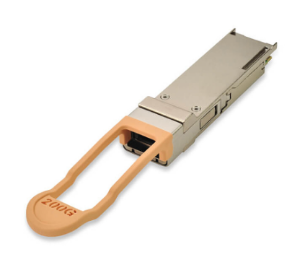
Also released in 2019 was the QSFP-DD (Quad Small Form-factor Pluggable Double Density) standard, which is compatible with previous QSFP versions. It provides eight electrical channels by adding an extra row of contacts, enabling high-speed solutions. QSFP-DD offers data transfer rates up to 800 Gbps and can connect to LC and MPO-16 interfaces. It also introduces a new connector type—the CS connector—with two CS duplex connectors on a single transceiver, suitable for 2x100G and 2x200G breakout applications.
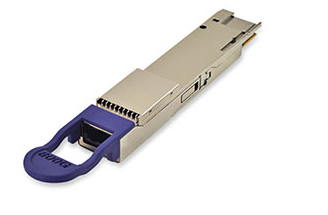
2019 remained a busy year for product releases, with the introduction of a new packaging form using CS connectors – OSFP (Octal Small Form-factor Pluggable) modules – supporting data transmission rates of 400G and above. It also introduced the new CS connector (along with LC duplex and MPO-12 connectors), allowing the use of two CS duplex connectors on a single transceiver, thus enabling data aggregation without the need for MPO connectors. It can cover transmission distances from 500 meters to 40 kilometers at 400G and 800G data rates.
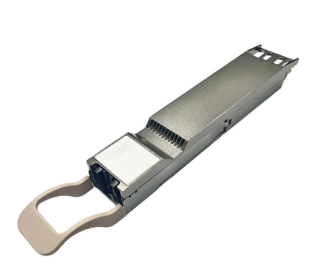
OSFP is a popular alternative to QSFP-DD, especially for higher bandwidth applications, due to its larger size and better thermal performance. This larger form factor facilitates heat dissipation, making it particularly suitable for high-power, high-density applications in data centers and high-performance computing environments.
SFP-DD (Small Form-Factor Pluggable Double Density) is one of the latest multi-source agreement standards. SFP-DD is one of the smallest modules available, enabling a doubling of data center port density and increased data transmission rates. It is based on 50G PAM4 signaling, supports two channels with speeds up to 100G, and is backward compatible with SFP+ modules and cables, as well as new SFP-DD double-density products. This standard is suitable for data centers, providing a more economical option for high-port-density breakout applications. With a data transmission rate of 100G, it will eventually be able to support 200G speeds through two 100G PAM4 channels, with transmission distances ranging from 500 meters to 10 kilometers.
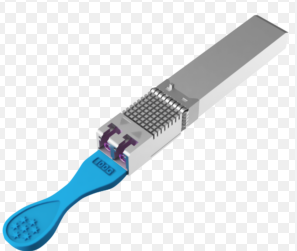
Although form factors such as GBIC, XENPAK, X2, and XFP are now largely obsolete and a thing of the past, SFP transceiver and SFP+ transceiver remain very popular. CWDM transceivers currently offer speeds from 1G to 100G, and new wavelengths and transmission distances are constantly being developed. Now, we can achieve 400G and 800G speeds on QSFP-DD, OSFP, and SFP-DD platforms. To achieve longer transmission distances, more wavelengths, and higher bit rates, form factors are continuously being updated.
2011-2015
The enhanced quad small form-factor pluggable (QSFP+) optical module, introduced in 2012, is a four-channel small form-factor hot-pluggable optical transceiver that supports LC duplex and MPO-12 fiber optic connectors. Similar to the QSFP, it is larger than the SFP+ transceiver and can transmit data over distances up to 40 kilometers. It remains the dominant form factor for 40 Gbps data rate applications.
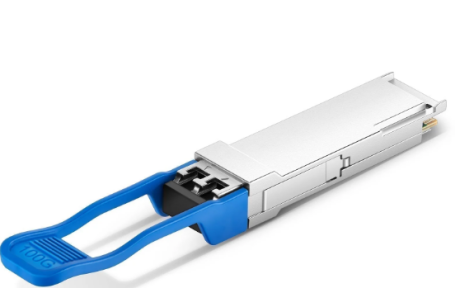
The QSFP28 was also introduced in 2014. It is based on the same technology as QSFP+ and has the same physical dimensions, but utilizes four 25Gbps channels. The QSFP28 has now become the preferred standard interface for 100G applications and is available in various configurations, with transmission distances ranging from 100 meters using multimode fiber to 80 kilometers using single-mode fiber. Available connectors include LC duplex connectors and MPO-12 connectors.
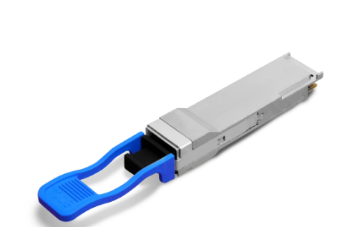
The SFP28 has the same physical dimensions as SFP and SFP+, is designed for speeds up to 25 Gbps, and was introduced in 2014. The SFP28 features a single 28 Gbps channel capable of transmitting 25 Gbps of data plus encoding overhead. The module is available with single-mode or multi-mode fiber optic connections. SFP28 transceivers use only one channel and offer LC duplex and simplex connectors, with transmission distances ranging from 100 meters to 40 kilometers.
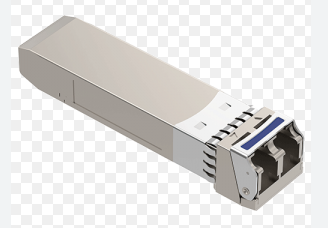
Since its introduction in 2009, the CFP interface has been continuously improved, with CFP2 and CFP4 released in 2012 and 2014 respectively, achieving higher performance and greater integration. CFP2 has half the physical size of the original CFP specification and provides data rates from 100Gbps to 200Gbps, suitable for amplified long-distance transmission systems using LC duplex connectors, with transmission distances ranging from 10 kilometers to 2000 kilometers. CFP4 has one-quarter the physical size of the original CFP standard but provides the same 100Gbps data rate, with a transmission distance of up to 10 kilometers. It also uses LC duplex connectors and consumes less than 6 watts of power.
2006-2010
In 2006, SFP+ (Enhanced Small Form-Factor Pluggable) was introduced as an enhanced version of SFP, offering higher data transmission rates of up to 10 Gbps. SFP+ gained support from numerous network equipment vendors and remains a mainstream industry standard, with the latest revision released in 2013. SFP+ supports data transmission rates of 8 Gbps, 10 Gbps, and 16 Gbps. SFP+ transceivers offer transmission distances ranging from 30 meters to 120 kilometers and are available with various connector types, such as LC duplex, LC simplex, and RJ45 interfaces.
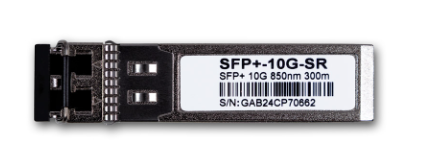
QSFP (Quad Small Form-factor Pluggable) transceivers are slightly larger than SFP transceivers and were also introduced in 2006. They have four channels and can transmit data at a rate of 4 Gbps over multimode or single-mode fiber, which is four times the speed of SFP transceivers. They can be used in applications with transmission distances up to 10 kilometers and are equipped with LC duplex connectors and MPO-12 connectors.
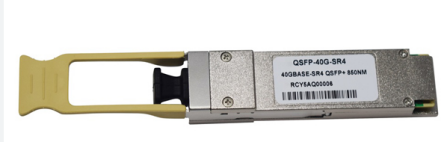
The CFP (C-Form Pluggable) standard was originally designed for 100 Gigabit systems (“C” is the Roman numeral for 100) to support the ultra-high bandwidth networks that form the backbone of the internet. Ten 10G channels or four 25G channels can support a single 100 Gbps signal (e.g., 100GbE or OTU4). Additionally, one or more 40 Gbps signals (e.g., 40 GbE, OTU3, STM-256/OC-768) can be transmitted over amplified long-distance transmission systems for distances up to 3000 kilometers or even further. Available connectors include LC duplex connectors and MPO-24 connectors.
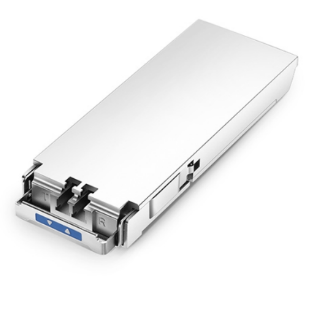
2001-2005
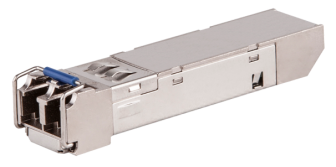
The SFP (Small Form-Factor Pluggable) transceiver emerged more than five years after the introduction of GBIC, and is a smaller version of the GBIC but with the same functionality. SFP largely replaced GBIC, with typical speeds of 1 Gbps for Ethernet and up to 4 Gbps for Fibre Channel. SFP uses various connectors such as LC duplex, LC simplex, RJ45, and SC simplex, and can transmit over distances up to 160 kilometers. SFP remains in high demand and sells in large quantities.
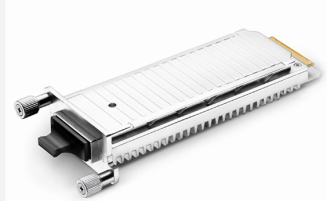
Another form factor released at almost the same time was XENPAK, defined in 2001 through a Multi-Source Agreement (MSA) by Agilent Technologies and Agere Systems, and compliant with the IEEE 802.3 working group’s 10 Gigabit Ethernet (10GbE) standard. This was followed by X2, which was half the size of XENPAK and introduced in 2003, offering a data transfer rate of 10 Gbps over a distance of 10 kilometers. The latest update to the X2 specification was in 2005.
The XFP (X-form factor pluggable) standard was released in 2002 and adopted in 2003, with an update in 2005. All XFP modules are 10G, with the Roman numeral “X” in the abbreviation representing “10”. Since around 2010, XFP modules have been primarily used for long-distance transmission, especially in dense wavelength division multiplexing (DWDM) applications.
1995
GBIC (Gigabit Interface Converter) was one of the first standards released in 1995 by the Small Form Factor Committee (now part of the Storage Networking Industry Association) for flexible, hot-swappable transceivers, and it was revised in 2000. Although GBIC is now largely obsolete, transceivers are sometimes still generically referred to as GBICs.
As a leading one-stop shop for fiber optic transceiver, AOFPLUS offers a full range of optical transceivers, such as 1.25G SFP, 10G SFP+, 25G SFP28, 40G QSFP+, 100G QSFP28, 200G QSFP56, 400G OSFP, 800G OSFP etc, Shop with us for your fiber optic business requires, if you have any need,you can check it on our AOFPLUS’s website:https://aofplus.com/.