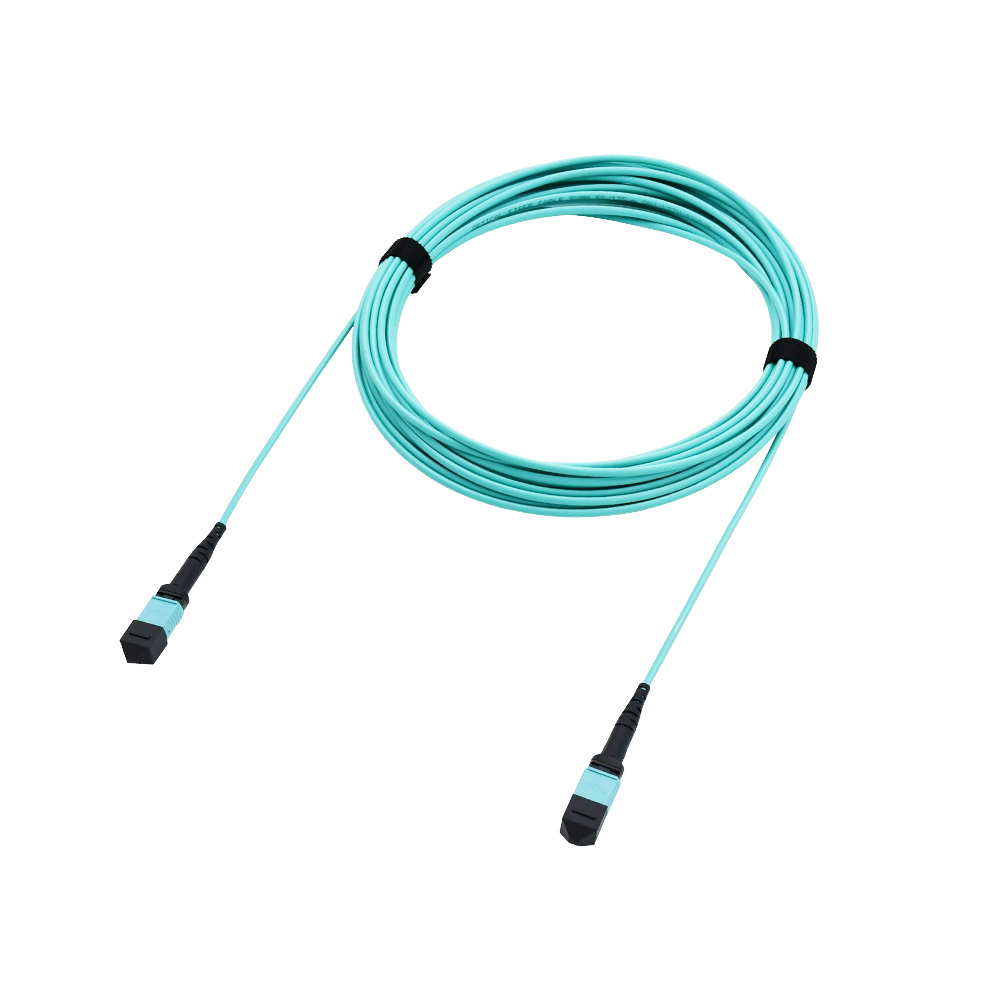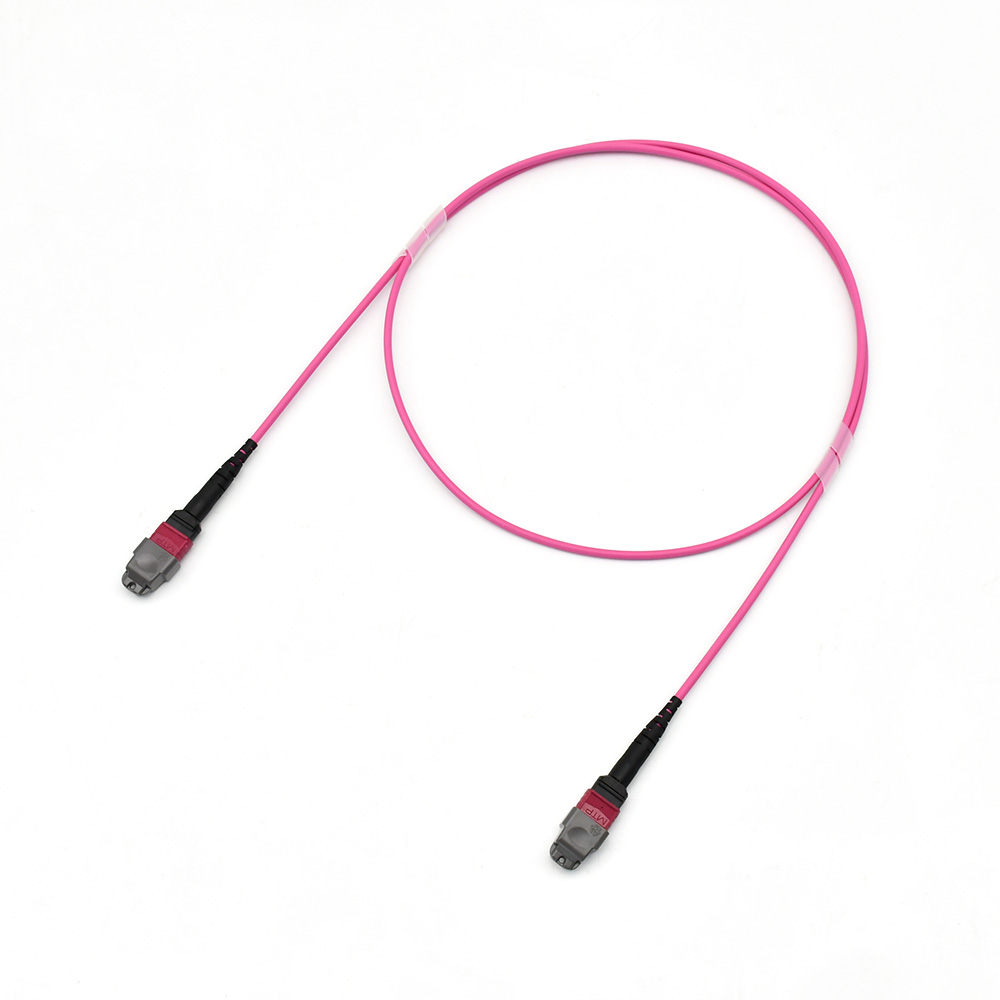
The continuous growth of data traffic, the demand for high performance, and the increasing prevalence of smart devices are constantly putting pressure on data center capabilities, leading many organizations to consider adopting fiber optic networks. In this article, we will explore five key advantages of investing in MPO|MTP fiber optic cable solutions.
What is The Difference Between MPO and MTP Cables?
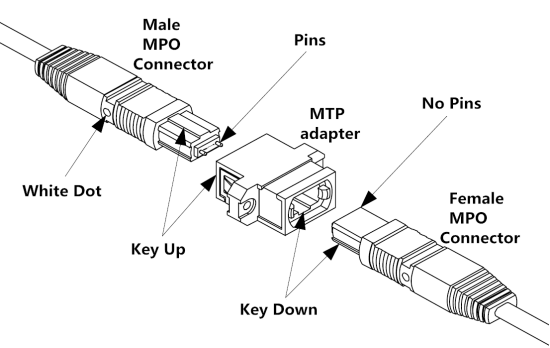
The terms MPO and MTP are often used interchangeably. MPO refers to the fiber optic connector at the end of the cable, and stands for “Multi-fiber Push On” connector. MPO connectors were originally developed according to IEC standards. MTP (Multi-fiber Termination Push-on) is a high-performance MPO connector manufactured by US Conec, which conforms to the MPO specifications. Therefore, MTP is a specific brand of MPO connector with some improvements. Both types of connectors are used in MPO cable solutions and are fully compatible with each other.
Common Applications of MPO|MTP Cable Solutions
MPO|MTP fiber optic cable systems are commonly used in data centers. They feature a modular design, are easy to install, and allow for easy expansion of fiber capacity, increased data transmission rates, or network expansion as needed. Continue reading to learn more about the specific areas where MPO|MTP fiber optic cable systems play a crucial role.
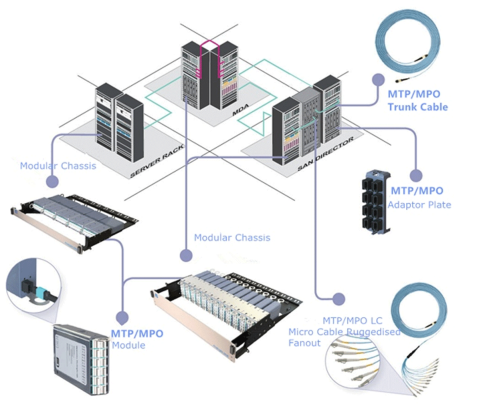
Increase Cabling Density Using MPO|MTP Cable Systems.
Traditional fiber optic cables only have a single pair of fibers. MPO|MTP fiber optic cables, however, can integrate 8 to 32 fibers into a single cable. Therefore, it is clear (but worth emphasizing) that one of the main advantages of using this technology is the increased data transmission speed—MPO|MTP cable systems can increase density by up to 32 times.
Simply Connect The Existing 10G or 25G System to The Newer 40/100G System
Maintaining data centers is a constant challenge due to the continuous development, upgrades, and installation of new technologies and equipment. MPO|MTP breakout cables can help connect existing 10G or 26G systems with newer 40G/100G systems, featuring an MPO|MTP connector at one end and multiple LC connectors (8 or 12) at the other. Integrating these two systems reduces upgrade costs and shortens the time required for the transition between old and new systems. Furthermore, standardized pre-terminated fiber optic cables save the time and effort typically spent crimping RJ45 network cables, simplifying complex cabling into neat and organized bundles. This will undoubtedly save you a significant amount of time!
Significantly Reduce the Amount of Cabling Within Data Centers
Replacing this complex cabling method (and the tangled mess of cables that results from traditional methods in some data center racks) with fewer MPO|MTP cables with higher fiber density not only saves physical space but also has the added benefit of allowing for more efficient airflow within the data center, thus reducing cooling requirements.
Pre-terminated Modular Design: No On-Site Splicing
MPO|MTP fiber optic cable solutions utilize a modular design, with pre-terminated adapter panels and fiber optic boxes simplifying operations by neatly grouping or segmenting numerous small fibers that would otherwise need to be individually arranged. Given the large number of fiber optic cables typically required in a data center, this modular approach helps improve efficiency and save time. On-site splicing is eliminated, reducing hassle.
Low Signal Offset: Elevate Fiber Optic Performance
If your business (such as high-frequency trading) requires a high-performance/low-latency network, then signal skew (also known as “latency skew” or “propagation delay”) is a critical factor to consider. To maintain high performance in fiber optic connections, it is crucial to minimize signal skew or deviation between parallel connections. This is the only way to ensure that the transmitted information can be successfully synchronized and reassembled at the final destination. MPO|MTP cable systems can measure and minimize signal skew. Problem solved!
MPO|MTP cabling systems are undoubtedly the future direction of development, offering significant advantages in the organization, management, and structure of data centers. They simplify upgrade and installation processes, enable the integration of new and old equipment, and save valuable time while improving network performance.