Fiber optic adapter types help connect different fiber cables and keep your network running smoothly. These small parts may look simple, but they play a big role in signal quality and stability. A fiber adapter holds two connectors in place and keeps them aligned so light passes through without loss.
You will often see common options like the LC adapter and SC adapter used in data centers, telecom setups, and home fiber networks. Each type comes with its own size, design, and purpose. Choosing the right one helps you avoid connection issues and improves overall performance.
In this blog post, you will learn how different fiber optic adapters work and where to use them. We will break down LC, SC, and other popular options in a simple way. By the end, you will clearly understand which fiber adapter fits your setup and why it matters.
What Is a Fiber Optic Adapter?
A fiber optic adapter is a small device that connects two fiber cables together. It keeps both connectors perfectly aligned so the light signal can pass through with very low loss. You can think of it as a bridge that joins two fiber lines without changing the signal.
Inside the fiber adapter, there is a sleeve that holds the connectors in place. This sleeve makes sure the fiber cores line up correctly. When the alignment is accurate, the connection stays stable and the network performs better.
You will often see different types like LC adapter and SC adapter used in patch panels, network racks, and wall boxes. Each one matches a specific connector type and size. Some adapters also support duplex connections, which means they can connect two fibers at the same time.
Fiber optic adapters help keep installations clean, organized, and easy to manage, especially in high-density networks.
Fiber Optic Adapter vs Connector
Many people confuse a fiber adapter with a connector, but both have different roles in a fiber network. They work together, but they are not the same thing.
A fiber optic connector sits at the end of a fiber cable. It carries the light signal and plugs into devices or panels. Common examples include LC and SC connectors. These connectors attach directly to equipment like switches, transceivers, or patch panels.
A fiber optic adapter, on the other hand, does not carry the signal itself. It connects two fiber connectors and keeps them aligned. Inside the fiber adapter, a sleeve holds both connectors in position so the signal can pass smoothly from one cable to another.
Here’s a simple way to understand it:
- Connector = the plug at the end of the cable
- Adapter = the bridge that joins two plugs together
For example, an LC adapter connects two LC connectors, while an SC adapter connects two SC connectors. Both are essential for building a stable and organized fiber network.
Types of Fiber Optic Adapters (Complete List)
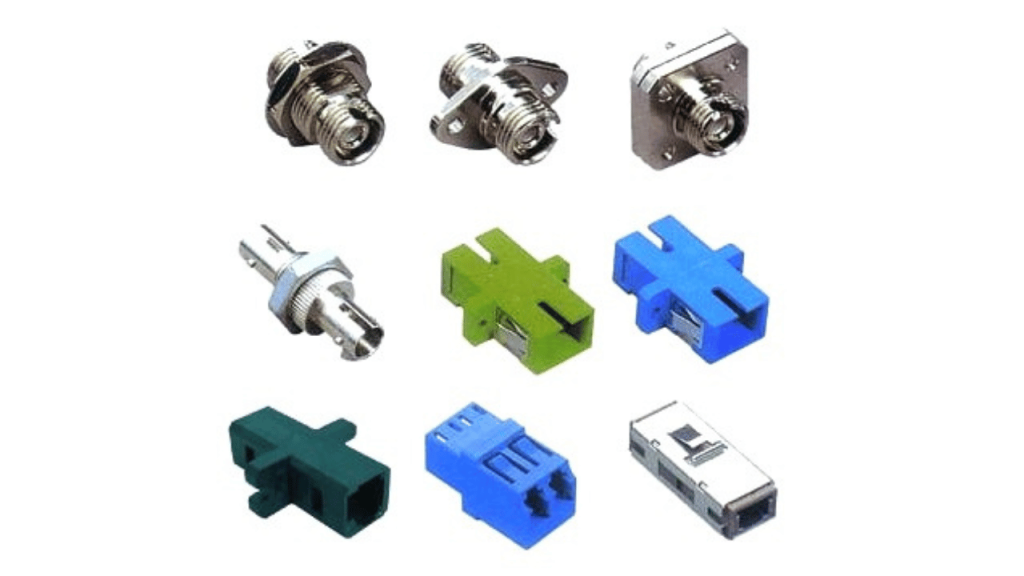
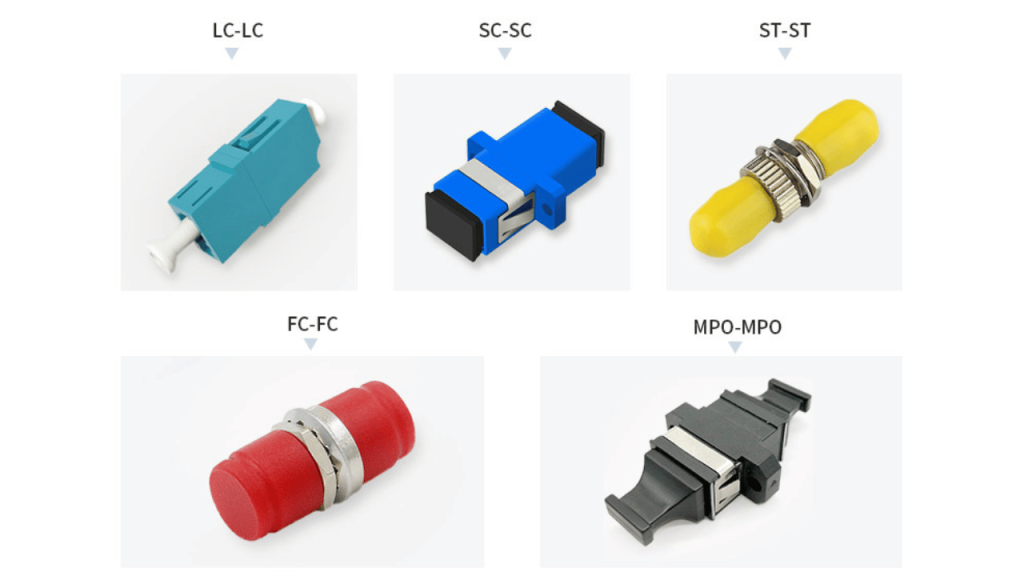
Fiber optic adapter types come in different designs to match specific connectors and network needs. Each fiber adapter supports a certain connector style and works best in a particular setup.
Below are the most common types you will see:
LC Fiber Optic Adapter
The LC adapter is one of the most widely used fiber adapters today. It has a small size, which makes it perfect for high-density environments like data centers. You will often find LC adapters used with SFP modules and modern networking equipment.
This fiber adapter usually supports duplex connections, meaning it can connect two fibers at once. It works best where space is limited and performance matters.
SC Fiber Optic Adapter
The SC adapter has a larger, square design and offers a simple push-pull connection. It is very common in telecom networks and FTTH (fiber to the home) setups.
An SC adapter is easy to install and remove, which makes it a reliable choice for both indoor and outdoor use. It is slightly bigger than an LC adapter but still widely used in many systems.
ST Fiber Optic Adapter
The ST adapter uses a round design with a twist-lock mechanism. You insert the connector and twist it to lock it in place. This type of fiber adapter was very popular in older networks.
Today, ST adapters are mostly used in legacy systems, industrial setups, or older buildings where existing infrastructure still relies on ST connectors.
FC Fiber Optic Adapter
The FC adapter features a threaded connection that screws into place. This design provides a very secure and stable connection, especially in environments with vibration.
You will often see FC adapters used in testing equipment, labs, and high-precision telecom applications where signal stability is critical.
MPO/MTP Fiber Adapter
The MPO/MTP adapter supports multi-fiber connectors, allowing many fibers to connect at once. This makes it ideal for high-speed and high-density networks.
These fiber adapter types are common in large data centers and backbone networks where fast data transfer and scalability are important. They help reduce cable clutter and improve efficiency.
LC vs SC Fiber Adapter Full Comparison
LC adapter and SC adapter are the most common fiber optic adapter types used today. Both serve the same purpose, but they differ in size, design, and typical use. Understanding these differences helps you choose the right fiber adapter for your setup.
Key Differences Between LC and SC Adapters
| Feature | LC Adapter | SC Adapter |
| Size | Small form factor | Larger, square shape |
| Connection Type | Push-pull latch | Push-pull snap-in |
| Fiber Support | Usually duplex | Simplex and duplex |
| Density | High-density setups | Standard density |
| Common Use | Data centers, SFP modules | Telecom, FTTH networks |
| Port Space | Saves space | Takes more space |
Final Thoughts
Fiber optic adapter types may look small, but they play a big role in keeping your network stable and efficient. From LC adapter options for high-density setups to SC adapter solutions for telecom and FTTH use, each fiber adapter serves a clear purpose. Choosing the right type helps reduce signal loss, improve performance, and keep your system organized.
Now that you understand how different fiber optic adapters work, it becomes much easier to pick the right one for your setup. Always match the adapter with your connector type, network needs, and environment to get the best results.
If you are looking for reliable fiber optic adapters, patch cables, or other fiber solutions, you can explore everything at AOF Plus. We offer a wide range of high-quality LC adapter, SC adapter, and other fiber adapter options designed for performance and durability. Whether you are setting up a small network or a large data center, you will find the right solution for your needs.