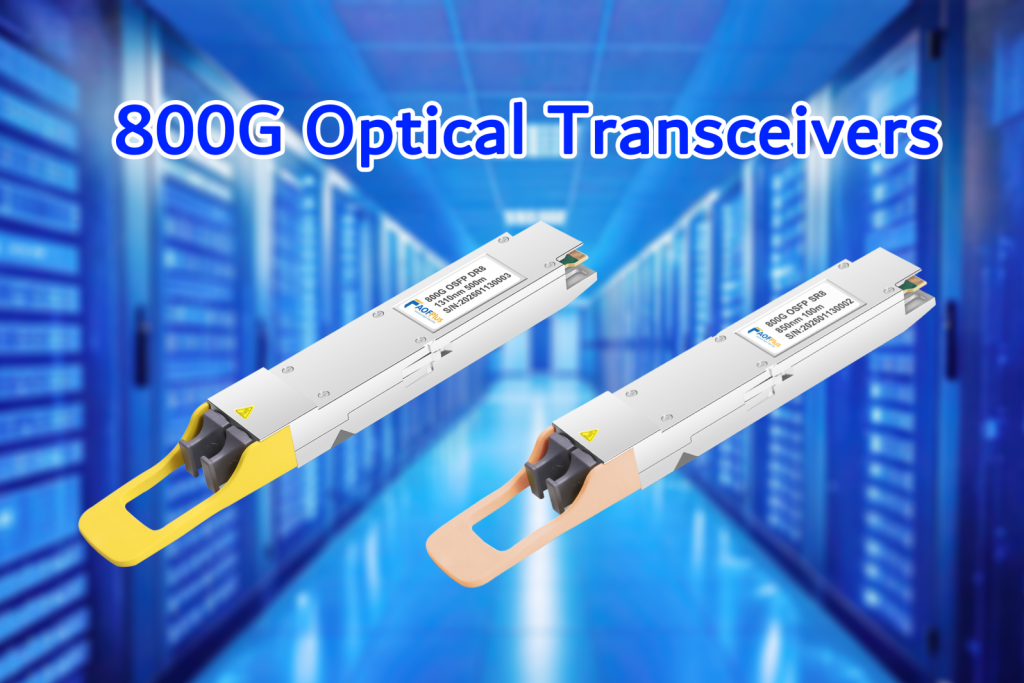
With the rapid development of artificial intelligence, machine learning, and high-performance computing, data volumes are exploding, placing higher bandwidth demands on modern data centers. Network architects are turning their attention beyond 400G, giving rise to the 800G ecosystem, promising unprecedented speed and efficiency. Within this evolving technological landscape, various 800G optical transceivers have emerged to meet specific application needs. While multiple standards exist, a deep understanding of the unique role of each is crucial for making informed infrastructure decisions. This comprehensive guide will delve into the nuances of 800G DR8 and directly compare it with other mainstream 800G fiber transceivers, providing you with the insights needed to navigate this complex technological field and optimize future network architectures.
The Rise of 800G: A New Era for Data Centers
The transition to 800G represents more than just a speed increase; it signifies a fundamental shift in how data centers are built and operated. The massive traffic generated by compute-intensive workloads makes traditional 400G and 100G links insufficient for efficient operation. The move to 800G aims to make networks future-proof by consolidating multiple low-speed links into a single high-capacity channel. This transformation simplifies cabling, reduces power consumption per bit, and lowers operating costs.
This bandwidth revolution is driven by advancements in signaling technology, particularly the shift towards 100G and 200G per channel. Modern transceiver modules no longer rely on a single high-speed laser but utilize multiple parallel channels to achieve a total speed of 800G. This parallelization brings greater efficiency and reliability, but also creates diverse options for different use cases. Understanding these options, from transmission distance requirements to power budgets, is crucial for making informed choices. It is in this context that a deep understanding of 800G DR8 fiber transceivers designed for specific purposes becomes particularly valuable.
Understanding 800G DR8 Fiber Transceiver: Technology and Applications
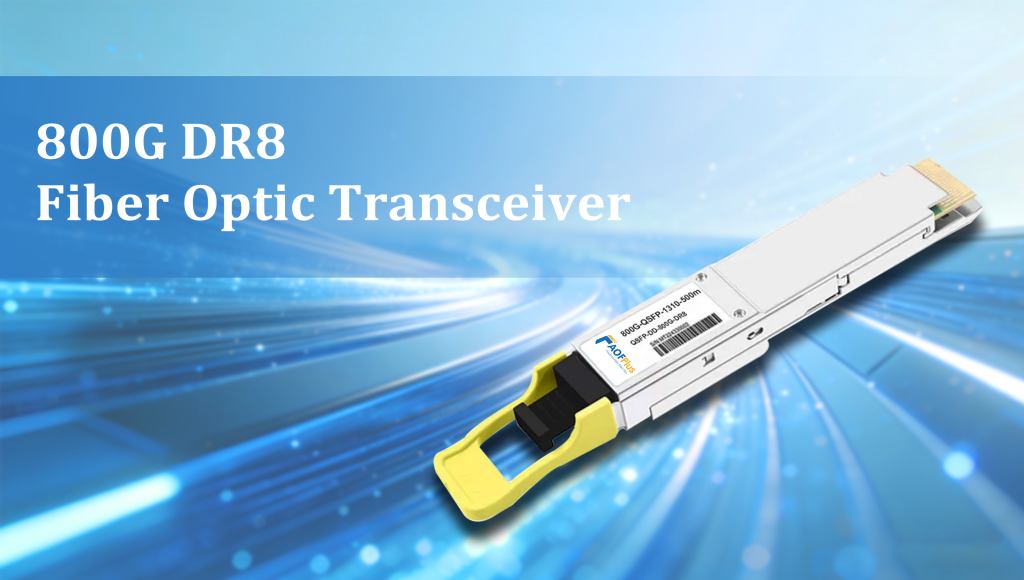
The 800G DR8 transceiver is designed for short-distance, high-density intranet connections within data centers. The “DR” in its name stands for “Data Center Range,” clearly indicating its intended use. This module aims to provide a cost-effective, low-power solution for links up to 500 meters long using single-mode fiber. Its main advantage lies in delivering high performance without the complexity and high cost of long-distance optics.
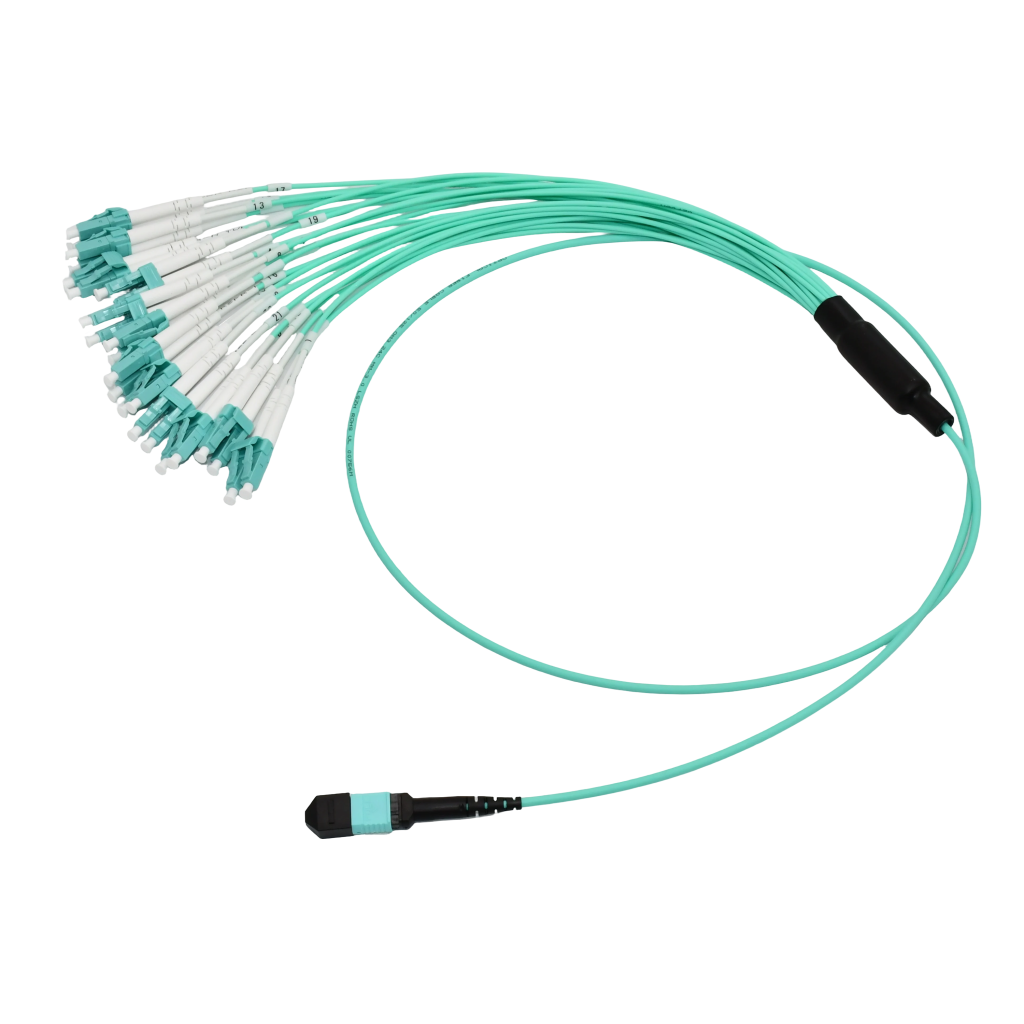
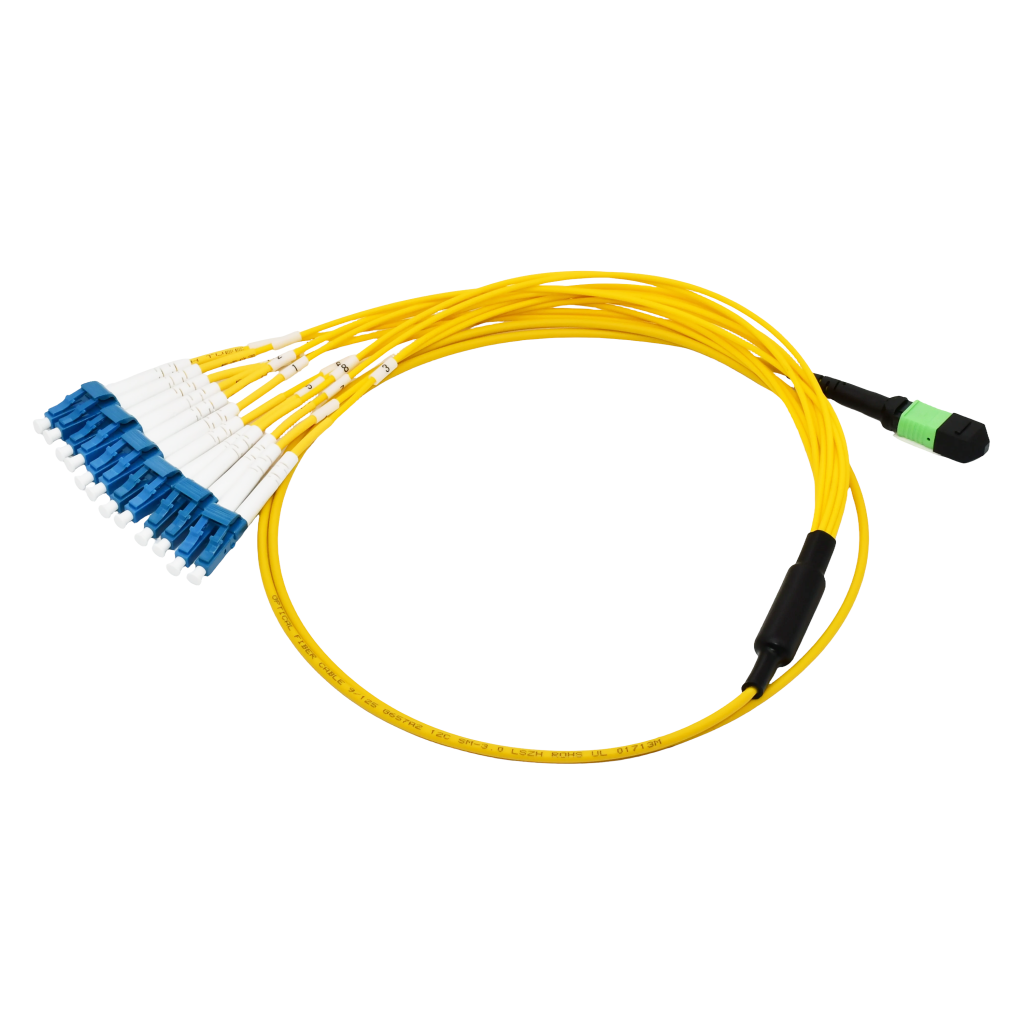
The core of the 800G DR8 transceiver module lies in achieving 800 Gbps speeds through eight parallel optical channels, each operating at 100 Gbps. These channels transmit over a single fiber ribbon cable, simplifying the physical infrastructure compared to using multiple independent fibers. This approach leverages proven 100G technology, making the design more straightforward and cost-effective compared to other 800G standards that rely on more complex signaling. This parallel design characteristic makes it a prime candidate for branch applications, where a single 800G port can be split into two 400G DR4 links or eight 100G DR1 links to connect servers, switches, or other devices. This flexibility is a key selling point for data center architects seeking to create dense, scalable networks.
Furthermore, the 800G DR8 fiber optic transceiver is designed for low power consumption. Operating over relatively short distances, it eliminates the need for powerful lasers or complex cooling systems found in long-distance optical modules. This power efficiency is crucial for large data center operations, as it directly impacts cooling costs and overall energy consumption. For spine architectures where short to medium-distance connections between switches are the norm, this module is a perfect choice, offering an attractive balance between performance and operational efficiency.
800G DR8 and Other 800G Fiber Transceivers
While the 800G DR8 fiber optic transceiver standard is well-suited for its intended use, other 800G modules exist to meet different needs. The main differences lie in transmission distance, technology, and cost. The following comparison with their main counterparts reveals the trade-offs involved in network design.
800G DR8 Vs.800G FR8 Fiber Transceivers
The development of high-speed data center networks has propelled 800G optical transceivers to the forefront, with DR8 and FR8 transceiver emerging as two key options. The 800G DR8 is designed for short-distance, high-density intra-data center connectivity, utilizing eight parallel 100G channels over single-mode fiber to achieve cost-effectiveness, low power consumption, and performance up to 500 meters. Its design excels in branch scenarios, allowing a single 800G port to connect to multiple 400G or 100G devices, making it ideal for spine architectures and high-port-density environments.
On the other hand, 800G FR8 fiber transceivers are designed for longer-distance applications, typically scalable to several kilometers within a campus network. Utilizingwavelength division multiplexing (WDM), the FR8 achieves higher fiber efficiency over medium distances without signal degradation. The choice between DR8 and FR8 optical transceivers depends on network requirements, including transmission distance, power budget, fiber availability, and cost considerations. While DR8 transceivers offer simplicity, lower power consumption, and flexibility for short-distance links, FR8 provides greater distance and higher fiber utilization for medium-distance interconnects. A deep understanding of the strengths and limitations of each standard is crucial for data center architects seeking to optimize performance, reduce total cost of ownership, and make their infrastructure future-proof. Choosing the right modules ensures high-speed, reliable, and scalable connectivity tailored to specific deployment scenarios.
800G DR8 Vs.800G LR8 Fiber Transceivers
The differences become even more apparent when comparing the 800G DR8 transceiver module with the 800G LR8 module. The “LR” in LR8 optical transceivers stands for long-distance, and this module is designed for distances up to 10 kilometers. This makes it suitable for metropolitan area networks and long-distance data center interconnects spanning cities or campuses.
Technically, LR8 fiber optic transceivers are significantly more complex and expensive. They typically rely on technologies for long-distance transmission, such as more complex wavelength division multiplexing schemes and amplifiers. It is a solution designed for a completely different application space. Using LR8 transceivers in short-distance, data center environments with distances of only a few hundred meters is inappropriate. Its higher cost, larger size, and greater power consumption make it impractical for the dense, short-distance connections specifically created for the 800G DR8 optical transceiver. For data centers, the decision is less about trade-offs and more about choosing the right tool for the job.
Key Factors to Choose 800G Fiber Transceivers
There is no single best option when choosing an 800G optical transceiver. The ideal module depends entirely on your specific network needs. Here are the most critical considerations:
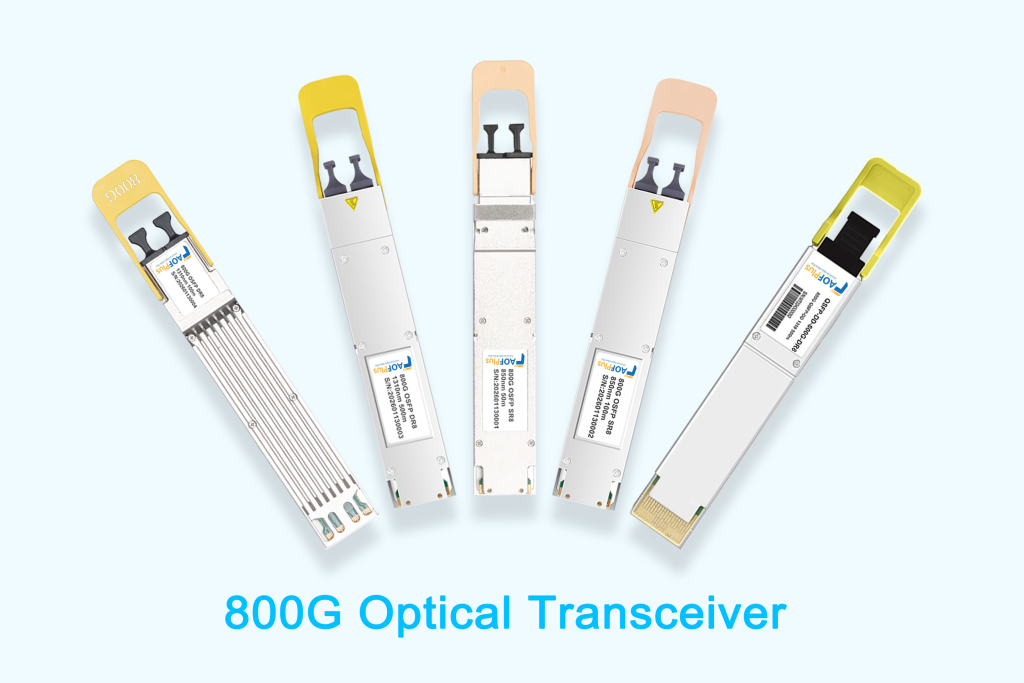
Transmission distance: This is the most important factor. If your link is within 500 meters, the 800G DR8 fiber transceiver is usually the wisest and most cost-effective choice. For links between 500 meters and 2 kilometers, the 800G FR4 standard becomes a strong competitor. For longer distances, the 800G LR8 fiber optic transceiver is the only viable option.
Fiber Infrastructure: Do you have ample fiber resources or are they scarce? If you are building a new data center with parallel fiber lines, the eight-channel design of the 800G DR8 fiber transceiver standard is perfectly acceptable. If you are upgrading an existing network and have limited duplex fiber pairs, the FR4 transceiver may be a better choice.
Branching Capability: If your network design requires connecting 800G switches to lower-speed devices, the branching capability of the 800G DR8 fiber transceiver can be a major advantage, providing superior flexibility and reducing the number of optical module types that need to be managed.
Conclusion
As data centers continue to evolve, the demand for high-speed, efficient interconnectivity will only increase. While a range of 800G transceiver modules exist to meet various needs, the 800G DR8 fiber transceiver has carved out a unique and critical role for itself. By providing tailored solutions for short-haul, high-density environments, it offers the optimal balance between performance, power efficiency, and cost. It is not intended to replace long-haul modules, but rather to excel in its specific domain, providing a robust and scalable foundation for next-generation data center architectures. For network architects and engineers, a deep understanding of when and why to deploy the 800G DR8 standard is crucial for building high-performance, cost-effective, and sustainable networks. As a leading optical transceivers supplier in the industry, AOFPLUS offers a wide range of premium transceivers such as 10G SFP+, 40G QSFP+, 100G QSFP28, 200G QSFP56, 400 QSFP-DD and 800G OSFP transceivers and so on. Whether for data centers, enterprise networks, or 5G communication, UnitekFiber provides advanced fiber optic solutions.