From data center interconnection to enterprise campus networks, from cloud service access to edge computing scenarios, the core objective of IT management services is to ensure the stable operation of information systems, improve resource utilization efficiency, and support business innovation. The technical characteristics of fiber optic networks perfectly fit with these goals, making them the underlying driving force for IT service upgrades.

Super Large Bandwidth Supports Massive Data Transmission
IT management services encompass scenarios such as data storage, cloud computing, and big data analytics, which place extremely high demands on data transmission rates and bandwidth capacity. Fiber optic networks support transmission speeds of 10G/25G/100G/400G/800G and even higher, far exceeding traditional copper cable networks, such as Cat6a cables which support up to 10Gbps. They can easily handle high frequency scenarios such as concurrent access by multiple users, large scale data synchronization, and AI model training data interaction. For example, in cloud service management, fiber optic networks ensure high-speed response for virtual machine migration, cloud storage read/write, and cross-regional cloud interconnection, avoiding service delays caused by bandwidth bottlenecks and improving the overall delivery efficiency of IT services.

Low Latency & High Stability Ensure Continuous Processes
The core business of IT management services, such as financial transaction systems, enterprise databases, and real time monitoring platforms, have strictly requirements for transmission latency and stability. Any interruption can cause significant losses. Fiber optic signals transmit at near light speeds and are unaffected by electromagnetic interference (EMI) or radio frequency interference (RFI). Fiber optic networks have extremely low insertion loss and signal attenuation, single mode fiber’s long distance transmission loss is only a fraction of that of copper cables, enabling microsecond level latency transmission. Furthermore, the failure rate of fiber optic networks is far lower than that of copper cables. Combined with proper fiber optic cabling design, it could effectively reduces the risk of link interruptions, ensuring 24/7 continuous operation of IT services and improving service availability and reliability.
Long Distance Transmission Capability Supports Distributed IT Architecture Deployment
IT management services commonly employ a distributed architecture, involving interconnection of devices across data centers, cities, and even countries, such as multi-regional data centers, remote office nodes, and edge computing nodes. Fiber optic networks can support repeaterless transmission over distances ranging from several kilometers to hundreds of kilometers, e.g., singlemode fiber at 100G speeds can achieve transmission distances exceeding 10km, while 400G speeds support medium to long distances exceeding 2km, enabling efficient interconnection between distributed nodes without the need for complex signal amplification equipment. This advantage allows IT administrators to flexibly deploy resources, build distributed cloud platforms, while simplifying remote node access management and reducing the deployment and maintenance costs of cross regional IT services.
High Density & Scalability to Meet IT Service Expansion Required
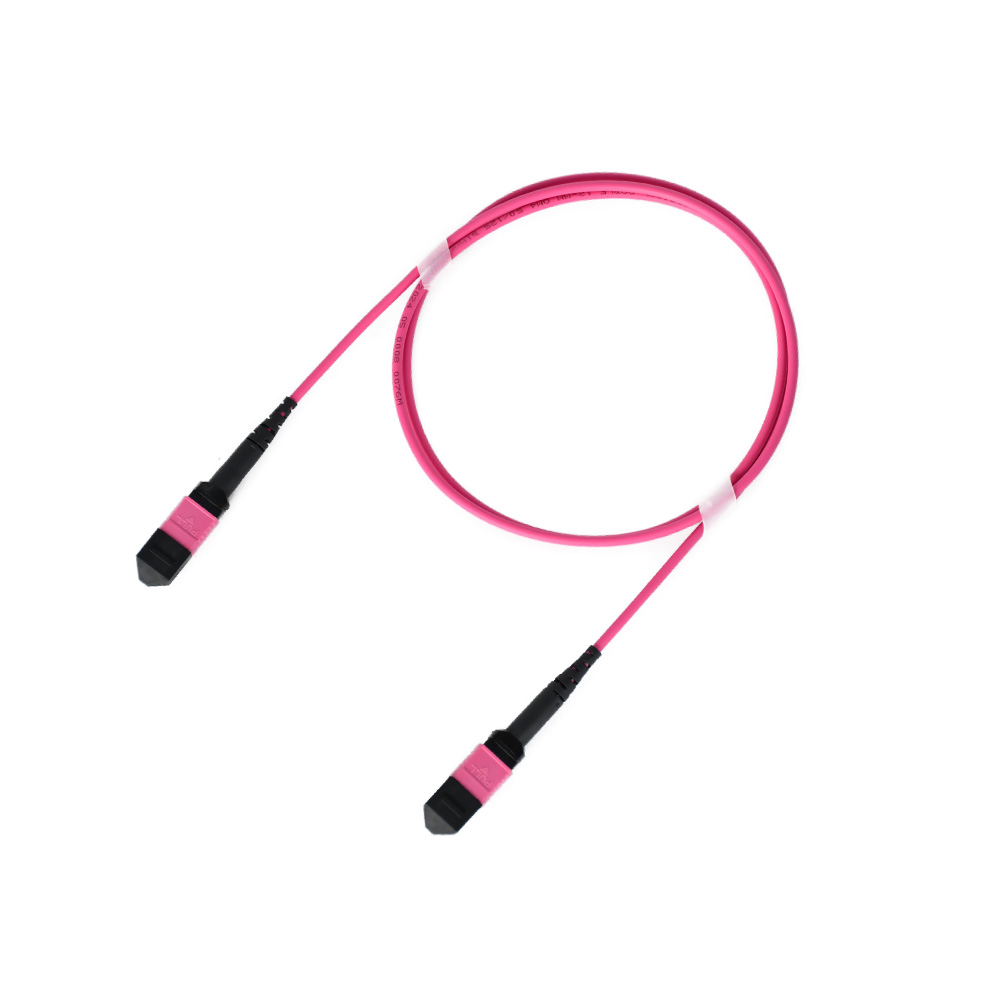
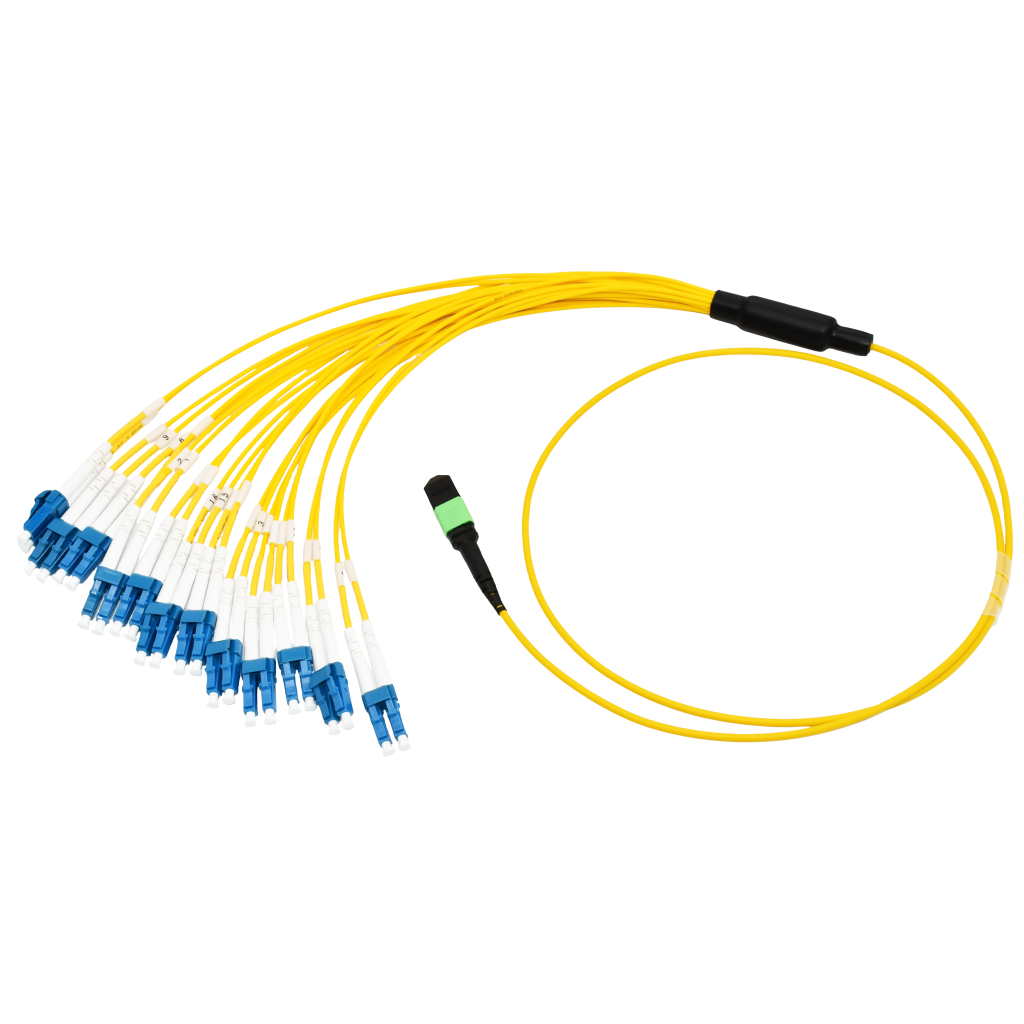
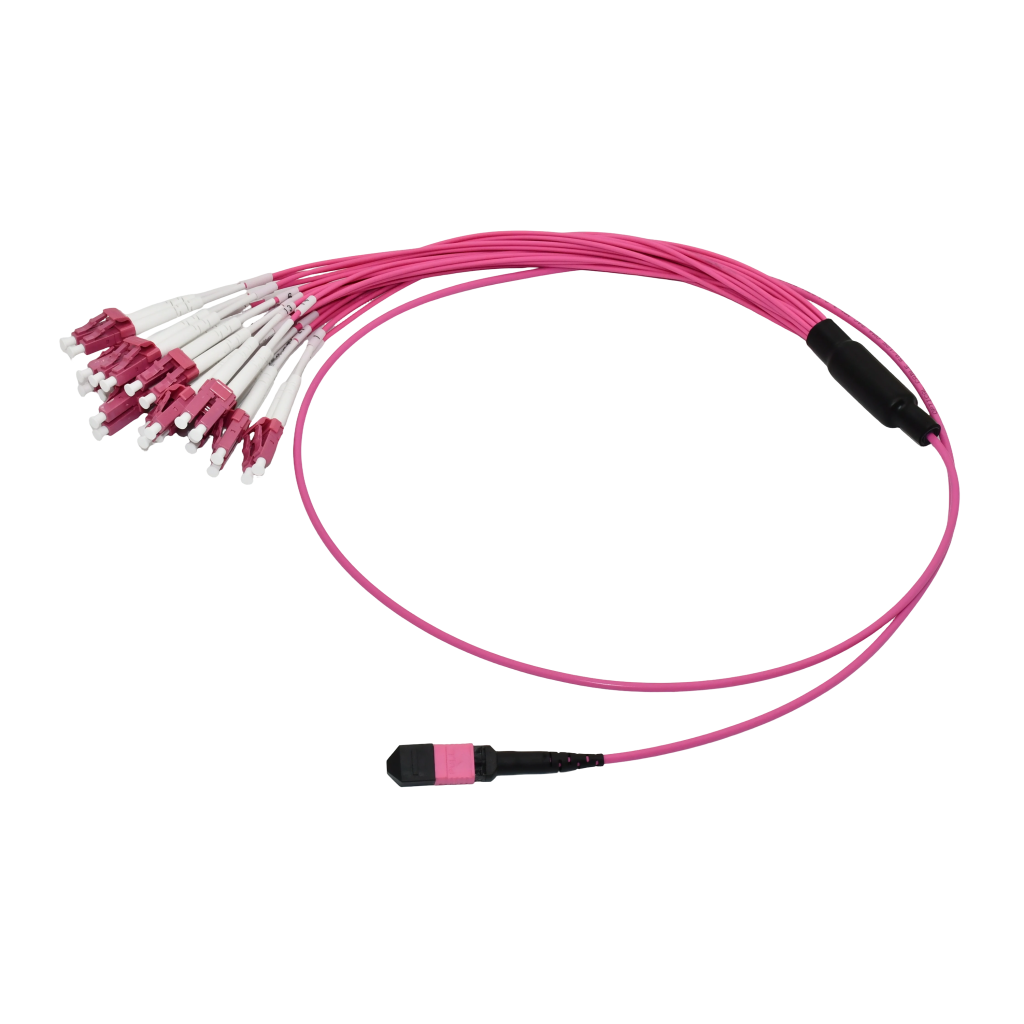
As enterprises undergo digital transformation and upgrades, the user scale and data volume of IT management services are growing exponentially, placing extremely high demands on the flexibility and convenience of network expansion. Fiber optic networks support high density cabling, such as MPO|MTP fiber optic cabling, where a 1U Fiber Patch Panel can achieve 144cores connections, enabling more devices to be connected within limited rack space and saving space.
Meanwhile, the preterminated design of fiber optic networks, such as preterminated fiber patchcord and pluggable optical tranceiver, supports on demand expansion, allowing IT management service to flexibly increase link bandwidth or access point according to business growth without reconstructing the overall network architecture, then reducing expansion costs and business interruption risks, and adapting to the long term sustainable development of IT services.
High Security&Interference Resistance, Safeguarding Data Transmission Privacy
IT management services involve sensitive content such as enterprises’ core data and users’ private information, making data transmission security crucial. Fiber optic signals transmit through enclosed cores without generating electromagnetic radiation, making them extremely difficult to tap or intercept. Additionally, fiber optics are immune to external electromagnetic interference, such as EMI from servers, switches, and other equipment in data centers, and environmental factors, like humidity and temperature fluctuations, eliminating risks of signal distortion or data leakage. This feature effectively meets the compliance requirements for IT management services in industries such as finance, healthcare, and government, reducing the pressure of data security management.
Fiber Optics Cabling Critical for Modern IT Managment Services
With its advantages of high bandwidth, low latency, stable transmission, long distance, high security, and easy scalability, fiber optic cabling networks perfectly meet the core demands of IT management services for efficiency, reliability, and flexibility. It’s not only support current needs such as massive data processing, distributed architecture deployment, and continuous operation of critical businesses, but also provide a solid foundation for future IT service upgrades towards higher speeds to 800G, 1.6T or higer, denser deployments, and greater security and compliance. Fiber optic networks are an indispensable core support facility for modern IT management services.