Whether you’re managing a large scale data center, upgrading an enterprise backbone, or building a reliable telecom infrastructure, understanding the key features and benefits of 40G optical transceiver is essential to making smart chioces. Below let’s dive into knowing the benefits of 40G optical transceiver.
High Data Transfer Rate
The most key feature of a 40G optical transceiver is its ability to transfer data at a rate of 40gigabits per second. This high speed allows for the rapid movement of large volumes of information. For data centers, 40G optical transceiver means that tasks such as data backup, virtual machine migrations, and real time analytic can be accomplished much more quickly. For example, in a cloud computing environment, where multiple users are accessing and uploading data simultaneously, a 40G optical transceiver can significantly reduce the time it takes to process and transfer these data, enhancing overall user experience and service efficiency.
Compact Form Factor
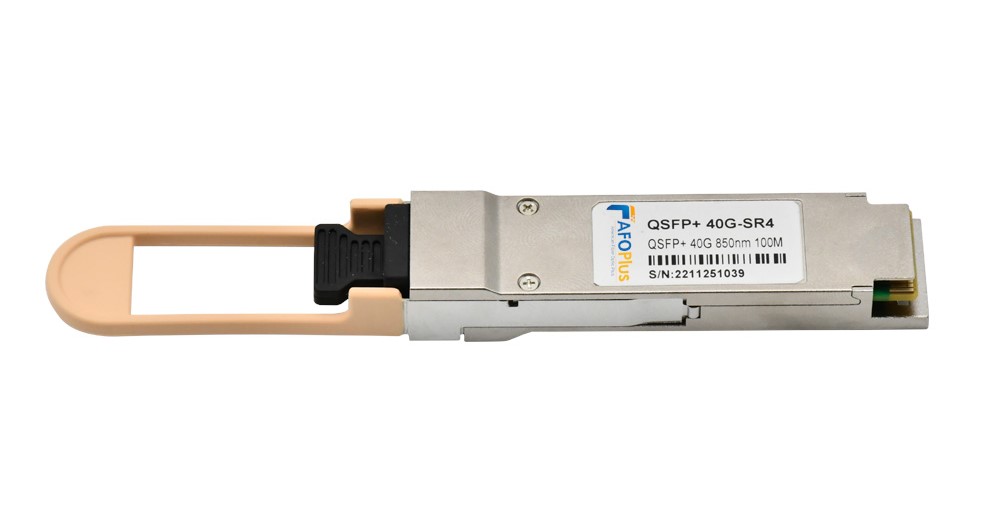
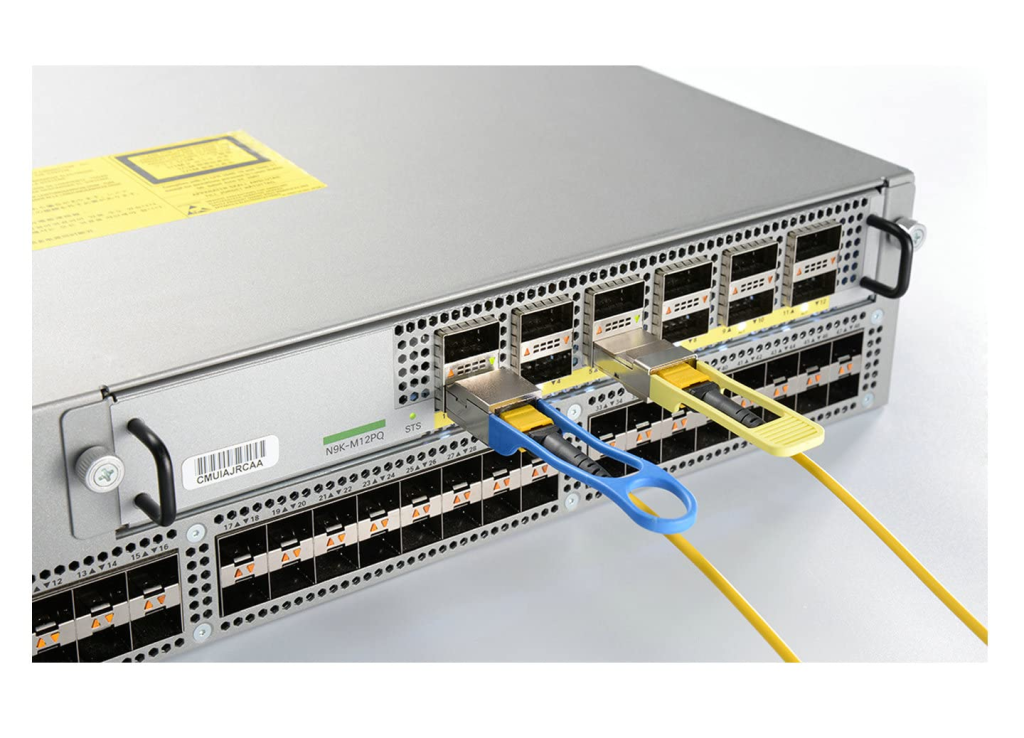
40G optical transceiver has a relatively small form factor. This compactness enables high density installations in network equipment. In a typical data center rack, the ability to fit multiple 40G fiber transceiver in a limited space is a huge advantage. It allows for more connections to be made without requiring a large amount of physical space. This is especially important as data centers strive to increase their computing power and network connectivity while keeping the footprint as small as possible. For instance, a network switch with multiple QSFP+ ports can support a large number of 40G links to servers and other network devices, maximizing the utilization of the available rack space.
Versatility in Fiber Compatibility
40G optical transceiver comes in different type that are compatible with various types of fiber. The QSFP+ SR4 40G optical transceiver operates at an 850nm wavelength, is designed for multimode fiber, and is suitable for short distance connections within data centers (usually up to 500meters) to link nearby servers and storage devices. Meanwhile, there are singlemode fiber compatible 40G optical transceivers like the QSFP+ LR4 (Long Reach 4) and QSFP+ ER4 (Extended Reach 4) which can transmit data over much longer distances, ranging from 10 kilometers to 40 kilometers. 40G optical modules offer a variety of models, precisely matching the distance requirements of different network links, whether for inter-area connections within data center campuses or long-distance telecommunications link deployments.
Hot Pluggable Capability
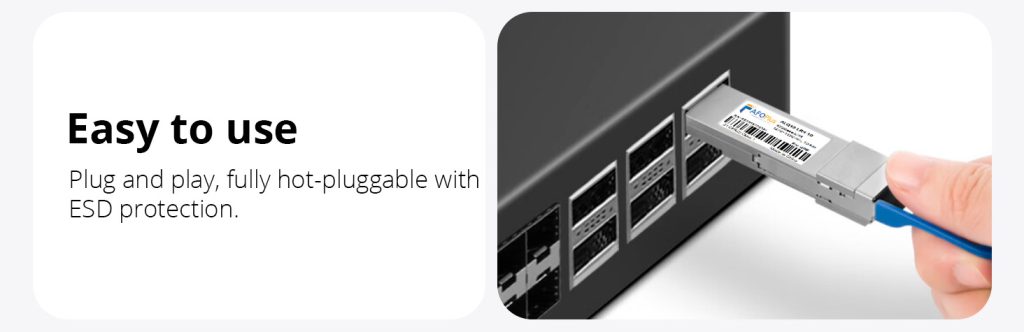
The hot pluggable nature of 40G optical transceiver is a significant benefit. It means that these optical transceiver can be inserted or removed from network equipment while the system is still running. This feature offers great flexibility in network maintenance and upgrades. For example, if a particular 40G link is experiencing issues or if a new transceiver with enhanced features needs to be installed, it can be done without shutting down the entire network. This minimizes network downtime and disruption to services, which is crucial for businesses that rely heavily on continuous network availability.
Energy Efficiency
Conclusion
40G optical transceiver has made strides in energy efficiency. They are designed to consume less power while delivering high performance. This is not only beneficial for reducing the overall power consumption of a network infrastructure but also helps in lowering operating costs. In a large data center with numerous network devices, the cumulative energy savings from using energy efficient 40G optical transceiver can be substantial. Additionally, it aligns with the growing trend of sustainable and green IT practices, making it an attractive option for environmentally conscious organizations.
40G optical transceiver possess a combination of features that make them indispensable in modern networking. Their high data transfer rate, compact form factor, fiber compatibility, hot pluggable capability, and energy efficiency contribute to enhanced network performance, flexibility, and cost effectiveness. Whether it’s for powering the high-speed connections in a data center or enabling long distance telecommunications, 40G optical transceiver is at the forefront of meeting the demands of today’s data hungry world.