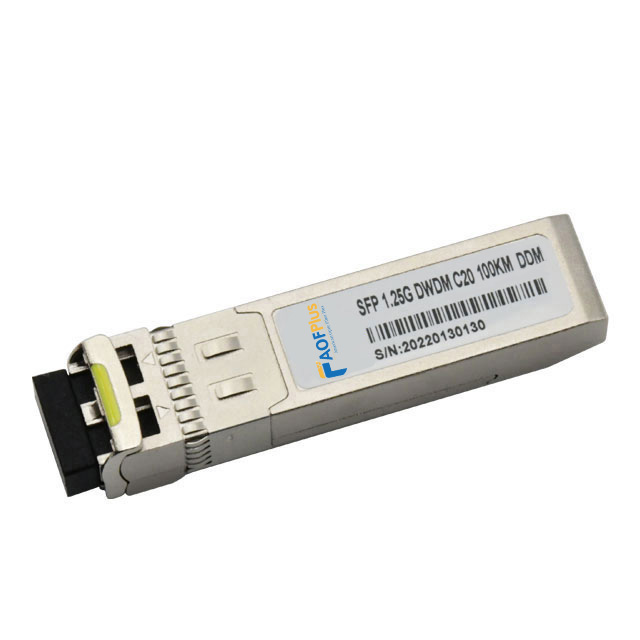
In the world of fiber optic networking, Small Form-factor Pluggable SFP transceiver plays a crucial role in enabling high-speed data transmission. Among the different types of SFP transceiver, single-mode and multimode SFP transceiver are two commonly used variants. Understanding the differences between them is essential for making informed decisions when building or upgrading a fiber optic network.
Singlemode SFP transceiver and multimode SFP transceiver constitute the two principal varieties of hot pluggable SFP transceiver utilized in fiber optic networks. Both of them employ LC connectors and are jointly named LC SFP transceiver. The main disparities between them lie in the kinds of fiber they are compatible with and their respective transmission ranges.
What is Singlemode SFP Transceiver?
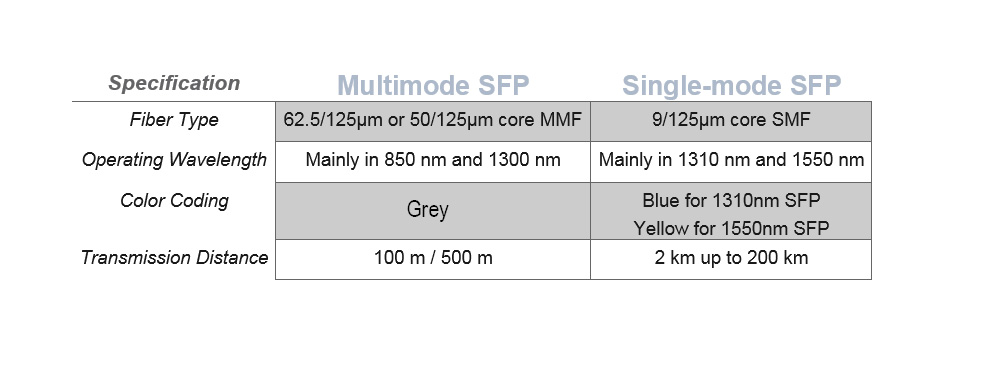
Singlemode SFP fiber transceiver (SMF SFP) operates on single-mode optical fiber with a core diameter of 9 microns and a cladding diameter of 125 microns. SMF SFP mainly operates at 1310nm and 1550nm wavelengths. Therefore, it is suitable for long distance data transmission applications such as 2 km, 10 km, 40 km, 60 km, 80 km, and 120 km. There are various types of singlemode SFP optical transceiver available, such as 1000BASE-LX and 1000BASE-EX.
What is Multi–mode SFP?
Multimode SFP transceiver (MMF SFP) uses multimode fiber with a core diameter of 50 microns or 62.5 microns and a cladding diameter of 125 microns. Common multimode SFP transceiver operate at a wavelength of 850nm for short distance transmission. Typically, they can reach 100 to 550 meters.
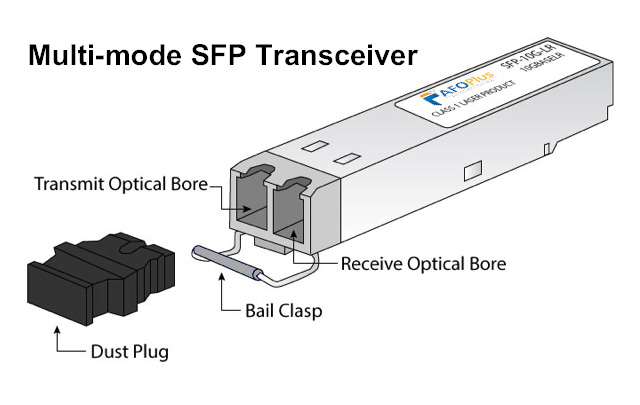
Singlemode vs Multimode SFP Transceiver: What’s the Difference?
There are several main differences between singlemode SFP transceiver and multimode SFP transceiver.
Wavelength of SFP Transceiver
Singlemode SFP module has a narrower laser wavelength, which works essentially in 1310nm and 1550nm wavelength. However, the multi-mode SFP module works in 850nm wavelength because of the bigger core size.
Transmission Distance
Single-mode SFP transceiver designed for long-distance transmissions, typically ranging from 2 to 120 kilometers, depending on the specific module type. They are ideal for large-scale networks requiring high-speed connectivity over vast distances.
Multi-mode SFP transceiver are better suited for shorter distances, generally covering 100 to 550 meters, making them a cost-effective choice for data centers and local area networks where shorter transmission ranges are sufficient.
Color Coding Ring for SFP transceiver
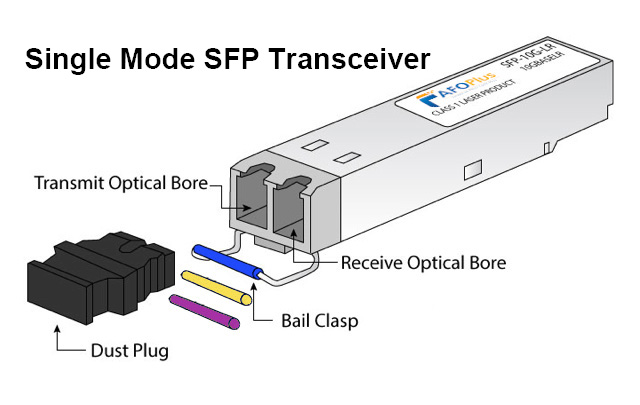
The color coding for single-mode SFP transceiver typically includes blue, yellow, or purple. Usually, blue is used for 1310nm modules, yellow for 1550nm modules, and purple for 1490nm modules. The color-coding for multimode SFP modules includes black for the label’s color-coding.
Cost of SFP Transceiver
From a cost perspective, singlemode SFP transceiver is more expensive than multimode SFP transceiver. This cost difference is largely due to the transmitters used. Single-mode SFP transceiver requires more powerful transmitters with higher RX/TX power ranges to support long distance data transmission, which increases their cost compared to the less expensive transmitters used in multimode SFP transceiver.
Conclusion
The choice between singlemode and multimode SFP transceiver mainly depends on cost and distance needs. Singlemode SFP transceiver suits long distance transmission, while multimode SFP transceiver is ideal for short distance with more economical solutions. If you are wondering what type of optical transceiver your company could benefit from using, you should consider finding out more from AOFPLUS. We are well versed in all things associated with optical transceivers and can help you understand what more you need to know.